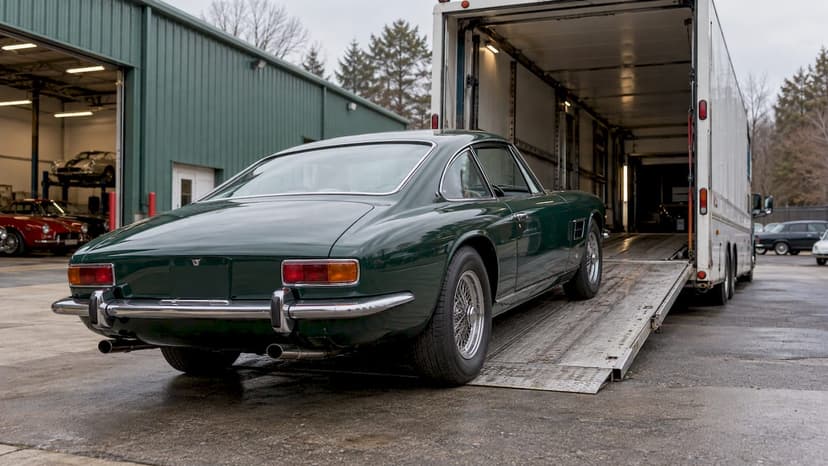
Car Pickup and Delivery for Stored Collector Cars
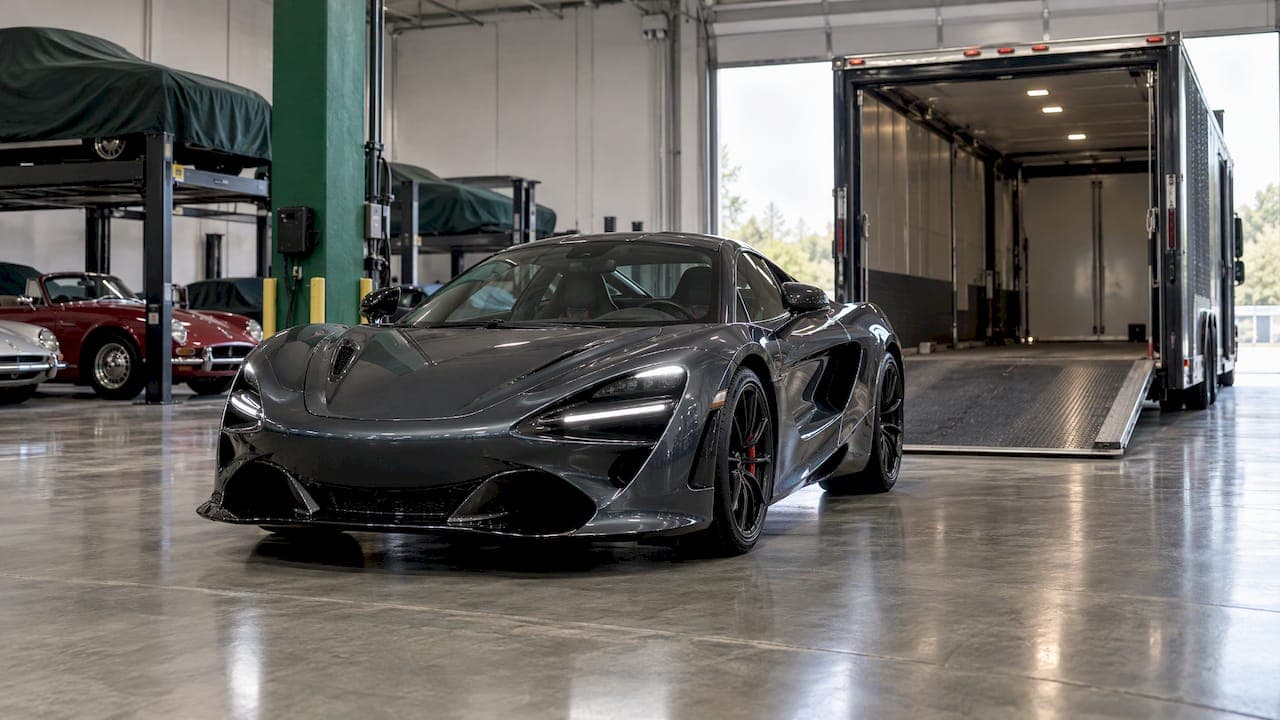
The best pickup and delivery for a collector car is the kind your storage facility already runs: the car leaves the building in an enclosed trailer or on an exercise drive, comes back with a documented condition report, and you arranged it from your phone. With NapGarage, you can request pickups and details through a mobile app, and the facility handles inspection reports and photo check-ins around the move. This guide explains how a pickup from storage works, what to document at handoff, and which costs sit outside the monthly storage fee.
NapGarageKeep Your Collector Car ReadyNapGarage combines climate-controlled storage with battery maintenance, inspection reports and app-based pickup requests for easier vehicle care.VisitKey Takeaways
- A pickup or delivery from storage is a handoff: the car’s condition on departure and arrival should be recorded in photos and a written report.
- Enclosed transport is the standard choice for exotic, classic and collector cars. Ask for it by name when you request a move.
- Transport is usually billed separately from storage, so ask for the move itemized before you confirm.
- Facilities with a phone app let you request a pickup, check the car’s status and see photos without driving to the building.
- Climate-controlled storage, battery care and exercise drives keep the car ready for the day you want it back.
Table of Contents
- What pickup and delivery means for a car in storage
- How to request a pickup from storage
- The handoff checklist: protect the car and your paperwork
- Why enclosed transport suits exotic and classic cars
- What affects the cost of pickup and delivery
- Car vault storage: what the term means
- Questions to settle before you book a pickup
- Find a facility near you
- Keep your car ready and your phone informed
- Our perspective: pickup is part of care, not an add-on
- FAQ
- Sources
What pickup and delivery means for a car in storage
Most pages on this topic are written for someone shipping a daily driver across the country. A collector car in a climate-controlled vault is a different job. The car may sit for months, the building may have height limits, narrow lanes or controlled access, and the person releasing the car is a facility manager who knows its condition, not a stranger at a curb.
There are three common situations:
- Storage to you. The car is brought to your home, a track, a show or a dealership, then returned afterward.
- You to storage. You hand the car over at the start of the season or after a purchase, and it goes straight into the vault.
- Storage to storage or storage to another city. Moving between facilities, or to an event in another state.
In each, the question is the same: who has the car between the vault door and the destination, and how is its condition recorded at each end?
A facility with a service layer answers that for you. NapGarage’s care model includes battery maintenance, detailing, fluid checks, exercise drives, inspection reports, photo check-ins and enclosed transport. That means the pickup is one more item on a car’s care schedule, not a separate errand you have to coordinate with a stranger.
How to request a pickup from storage
The process is simple when the facility offers a request tool. Here is the routine, step by step, with where it goes wrong.
1. Decide where and when
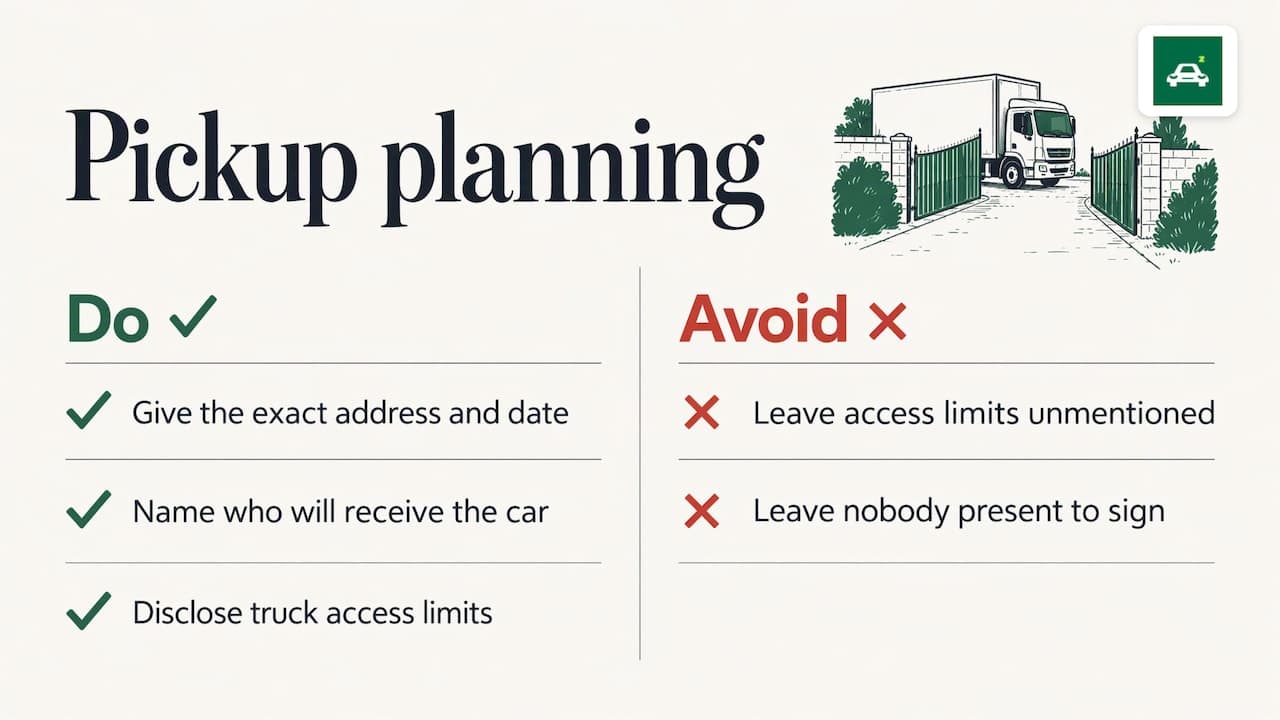
Give the exact address and the date you need the car. Say whether it is a residence, a business or an event venue, and who will be there to receive it. Cars most often get delayed at the destination, not the vault: a gated community, a street too narrow for a trailer, or nobody present to sign.
If your location has limited truck access, say so up front. Speedway Media notes that pickup or delivery spots with height restrictions, narrow lanes or security checkpoints should be discussed before booking. The same applies to a storage building with a low door or a tight loading area.
2. Choose the transport type
For a collector car, ask for enclosed transport. The car travels inside a covered trailer, shielded from road debris, weather and view. NapGarage lists enclosed transport among its services, so you can request it with the same app request as the pickup. For a deeper look at how to prepare a classic for a long haul, read our guide to classic car transport.
3. Submit the request in the app
Through the NapGarage app you can request a pickup and ask for details on your car without calling the front desk. A request should include the car, the destination, the date, a contact for handoff and any special instructions: a key that stays with the car, a cover that travels with it, a charger or a battery tender left in place.
4. Confirm the plan in writing
Get the pickup window, the destination address, the transport type and the total price back in writing before the day. Ambiguity is where surprise charges start.
5. Be reachable on the day
The driver or facility manager may need to call you if a gate code is wrong or a street is blocked. A phone that goes to voicemail is the most common reason a pickup slips a day.
6. Review the report at delivery
Compare the car against its departure photos and the inspection report before anyone signs. The next section covers exactly how.
The handoff checklist: protect the car and your paperwork
A clean handoff is the difference between a settled claim and a long argument. Speedway Media’s guide recommends timestamped photos of every panel, the undercarriage, all glass, the wheels and the interior before pickup. It also recommends reviewing the bill of lading, the document the driver signs to record the car’s condition, to confirm every existing mark is written down before you sign. At delivery, it advises comparing the car against your photos and noting anything new, however minor, before the driver leaves.
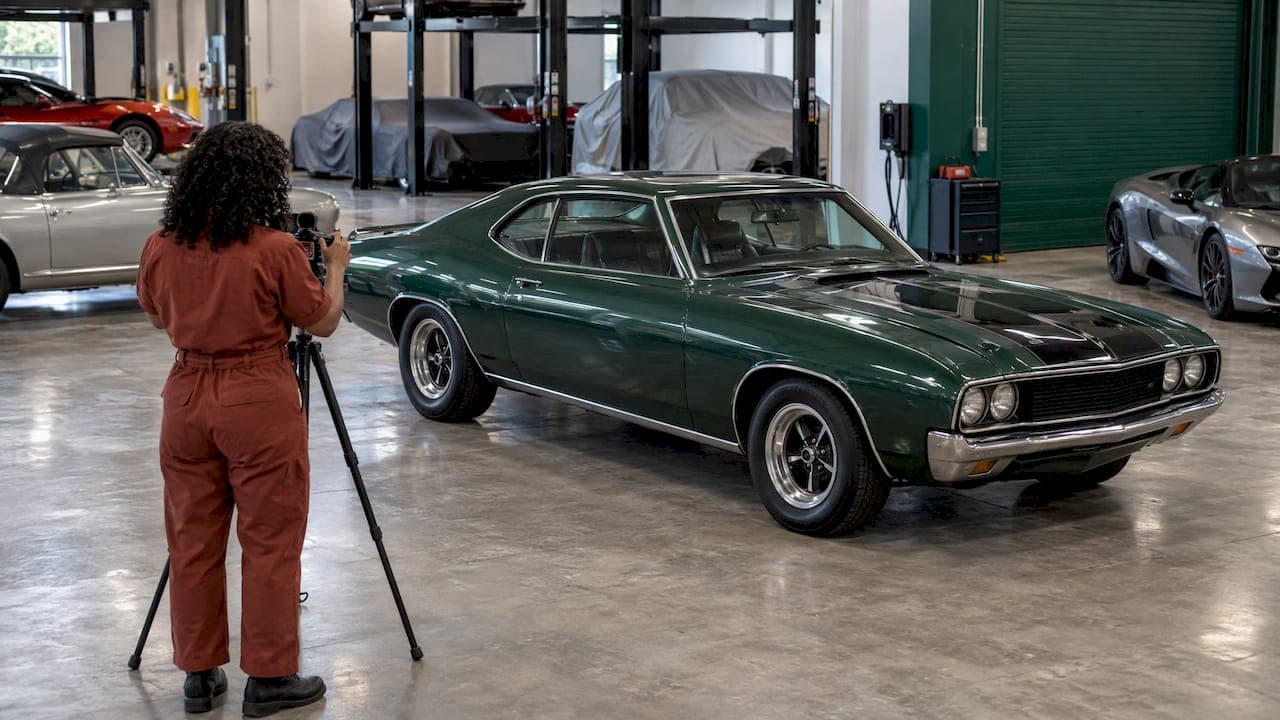
Here is how that looks for a car coming out of storage.
Before the car leaves the vault
- Ask for the most recent inspection report and photos. A facility that does photo check-ins already has a dated record of the car’s condition.
- Take your own timestamped photos of all four sides, the roof, the wheels, the interior and the odometer.
- Remove loose items, toll tags and anything valuable that is not part of the car.
- Confirm the fuel level, battery state and tire pressures with the facility.
- Note any existing chips, scratches or paint touch-ups on the bill of lading.
At the destination
- Inspect the car in good light before signing. Walk the full perimeter, then look under the car for fresh drips.
- Compare with the departure photos, panel by panel.
- Write any new mark on the delivery report before the driver leaves, and photograph it.
- Only then sign.
On the way back into storage
Repeat the process in reverse. A good facility will log the car in with a fresh condition report, photograph it on arrival and put it back on its maintenance schedule. That is where the inspection report and photo check-ins earn their keep: they give you a continuous record from one handoff to the next, on your phone.
Why enclosed transport suits exotic and classic cars
Open carriers are common and cheaper for everyday vehicles. Exotic and collector cars have low ground clearance, original paint, delicate bodywork and often a value that makes any scratch costly. An enclosed trailer removes exposure to road debris, rain and sun, and keeps the car out of public view during the move.
The features you want from a pickup service are:
- A covered, enclosed trailer.
- Drivers who handle low cars with ramps or lift gates suited to them.
- A written condition report at both ends.
- Door-to-door service, so the car is never left in a terminal lot.
NapGarage includes enclosed transport in its offer and ties pickup requests to the app and the facility’s reports, so the transport is part of one care record.
What affects the cost of pickup and delivery
Storage and transport are two different bills. Your monthly storage fee covers the space and the environment. Moving the car is usually priced per trip.
For transport, the main drivers are:
- Distance. A local run to a track day costs far less than a cross-country move.
- Transport type. Enclosed costs more than open because trailers carry fewer cars.
- Vehicle size and condition. Larger cars and cars that do not run (needing a winch) cost more.
- Route and timing. Pickup and delivery locations, season and how quickly you need the car all move the price.
- Access. Locations a large trailer cannot reach may need a meeting point nearby.
Two habits save money and surprises. Ask for one all-in quote that names the transport type, the pickup window and any fees. And when a quote is cheaper because the car goes to a terminal rather than your door, ask what happens if the car waits there. Terminal waiting is where extra daily fees tend to appear.
What storage itself costs
For context, Modern Car Collector describes professional collector car storage as typically running from $100 to $500 per month, with climate control as the gold standard. Cost Insider’s Los Angeles analysis shows that climate-controlled indoor storage in that market runs higher, and that valet-style and full-service facilities with inspections cost more again. Prices vary by city, vehicle size and service level, so ask the facility for a current quote rather than relying on any average.
Car vault storage: what the term means
“Car vault” is how many collectors describe a secure, enclosed, climate-controlled building for vehicles, as opposed to a covered parking lot or a rented unit with a roll-up door. The things that make a vault a vault are:
- Climate control. Modern Car Collector puts the ideal at consistent temperatures between 50 and 70 degrees Fahrenheit and relative humidity between 40 and 60 percent. Stable conditions protect paint, leather, rubber and electronics. See our guide on the best humidity level for car storage for how it works.
- Security. GearJunkie points out that how a facility is monitored matters, whether by a guard or a robust security system, and that very valuable or rare cars may call for additional measures.
- Care while the car sits. Battery maintenance, fluid checks, tire care, detailing and exercise drives keep a stored car ready to drive.
- Reporting. Inspection reports and photo check-ins let you see the car without visiting.
The last two are where a service-oriented vault differs most from a parking space. A car in a plain building is simply parked. A car in a managed vault is looked after, and the pickup is the moment you can see the proof of that care.
Questions to settle before you book a pickup
- Is the transport enclosed, and is it door to door?
- Who is the driver, and who is accountable for the car during the move?
- Is a condition report and photo set made at departure and arrival?
- What is the notice needed for a pickup, and can I request it in an app?
- What is the total price, and which items are separate from my storage fee?
- Can the car be exercised or readied (charged, fueled, detailed) before it leaves?
Notice requirements vary by facility, so confirm the lead time for yours when you set up the account. A good facility will give you a clear answer and put it in writing.
Find a facility near you
If you are comparing places to keep a car, location decides how easy every pickup is. NapGarage lists enclosed, climate-controlled storage in markets including Los Angeles, Miami, Philadelphia, Sterling, Virginia, Fort Lauderdale and Palm Beach and Tampa and Sarasota. You can also browse all exotic and classic car storage by city.
Keep your car ready and your phone informed
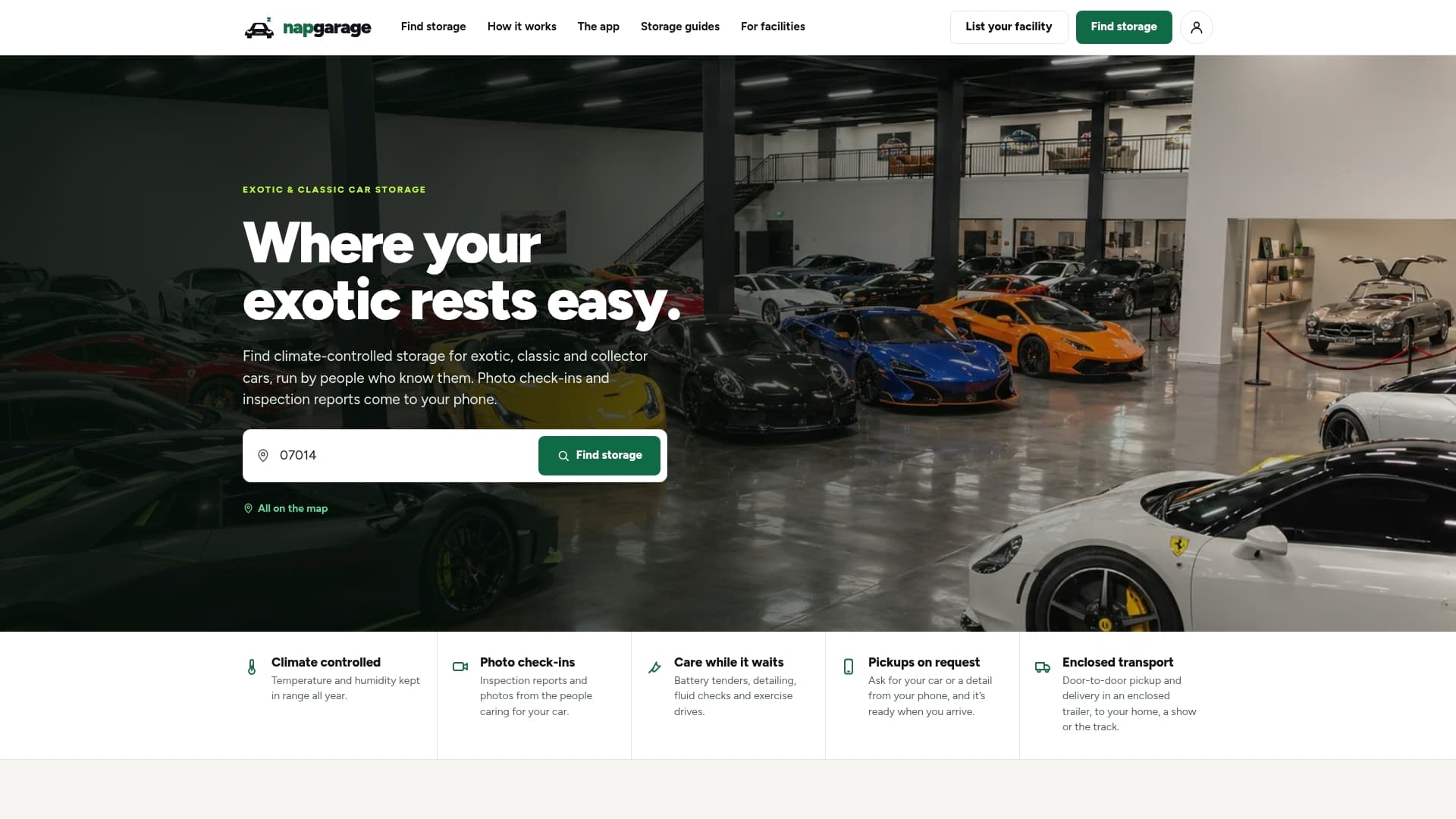
NapGarage focuses on enthusiast-grade storage. For you, that means your car is stored in a climate-controlled facility, maintained on a schedule, and reported on through your phone. When you want it back, you ask in the app, and the car comes out of the vault with a record of how it went in.
To request a quote and find a facility near you, start at NapGarage’s storage directory.
Our perspective: pickup is part of care, not an add-on
Most collectors think of transport and storage as two separate purchases. We think of them as one chain of custody. The car’s condition on the day it goes in, how it is looked after while it sits, and how it comes out should all appear in the same record.
That is why our model puts inspection reports and photo check-ins on your phone, alongside battery maintenance, fluid checks, detailing and exercise drives. A pickup request from the app then sits next to the rest of the car’s history. You do not have to chase a facility for a status or visit just to see the car.
Enclosed transport is part of what we offer for the same reason. An exotic or classic car deserves a move that matches the care it gets in the vault. If you want the car back for a weekend drive, a show or a sale, the answer should be a request and a confirmation, not a week of phone calls.
NapGarage Team
FAQ
How do I request a car pickup from storage?
Submit the request through your facility’s app or contact method with the destination address, date, transport type and a contact for handoff. With NapGarage, you can request pickups and details in the mobile app. Confirm the window and total price in writing, and ask the facility how much notice it needs.
Is enclosed transport worth it for a classic or exotic car?
For collector cars, it is the standard choice. The car travels inside a covered trailer, away from road debris, weather and public view. Ask for enclosed, door-to-door service and a condition report at both ends.
What should I photograph before my car is picked up?
Take timestamped photos of all four sides, the roof, glass, wheels, undercarriage, interior and odometer. Speedway Media recommends reviewing the bill of lading so every existing mark is recorded before you sign. At delivery, compare the car with those photos before signing the report.
Is pickup included in my monthly storage fee?
Usually transport is priced as a separate trip, based on distance, transport type and vehicle size, while the monthly fee covers the space and care. Ask your facility for an itemized quote so you know what each part costs before you book.
What is car vault storage?
It is a secure, enclosed, climate-controlled building for collector vehicles, with monitoring and often regular care such as battery maintenance and inspections. It differs from ordinary parking because the car’s environment and condition are actively managed.
Sources
- Shipping a Luxury or Exotic Vehicle: What Changes at the High End, Speedway Media
- How to Store a Collector Car, Modern Car Collector
- How to Find the Best Classic Car Storage, GearJunkie
- Westside Collector Car Storage Cost 2026, Cost Insider