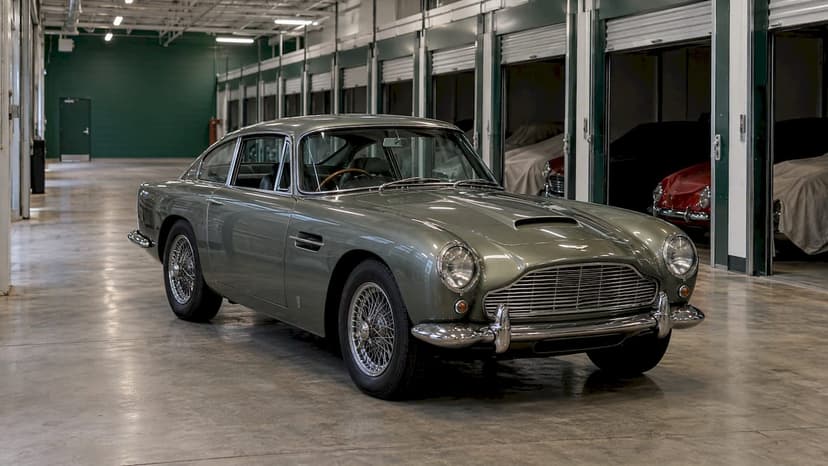
Classic Car Transport: How to Ship a Collector Car Safely
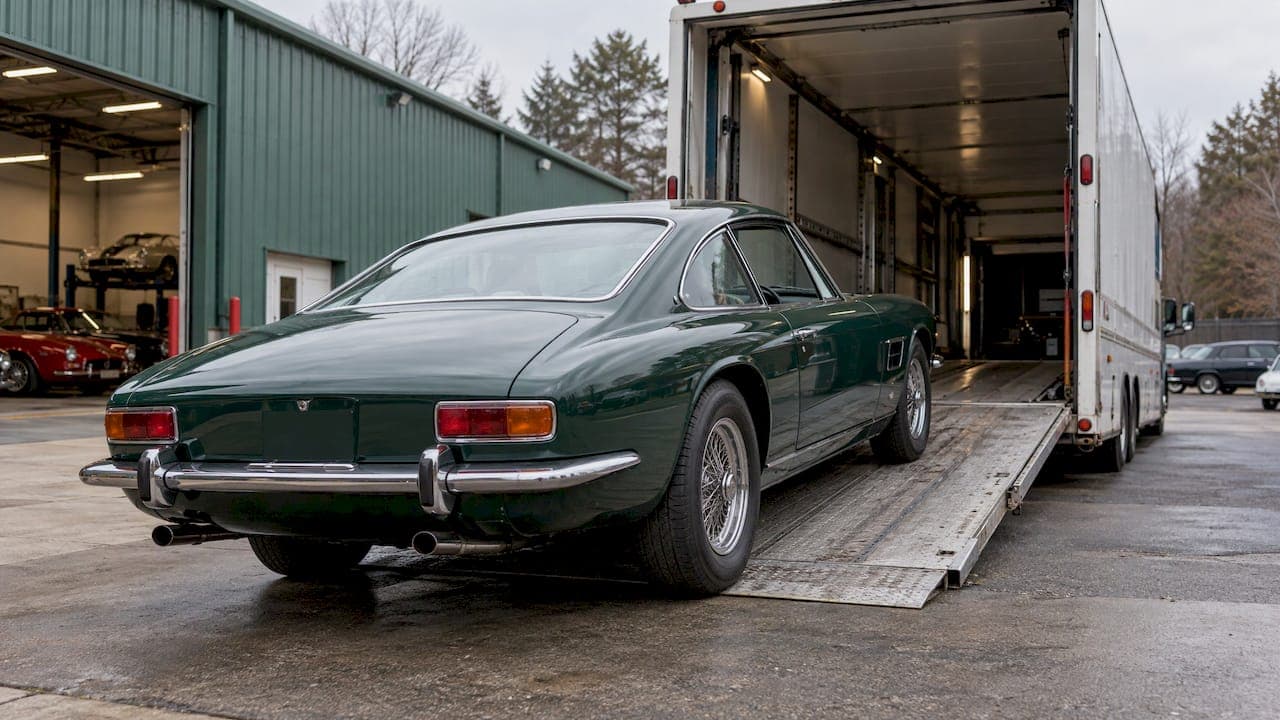
Classic car transport means moving a collector vehicle on a truck instead of its own wheels, and for anything restored, rare or original the safe default is an enclosed carrier, a prepared car, a verified cargo policy and a clear delivery plan. This guide covers each of those steps, from choosing a carrier type to the questions that protect you when the car is out of your sight.
NapgarageProtect Your Classic After DeliveryKeep your collector car in climate-controlled storage with inspection reports, photo check-ins, and care features like battery maintenance and fluid checks.VisitTL;DR
- Choose an enclosed carrier for restored, show-quality, rare or original-condition cars. Open carriers suit sturdy, regularly driven cars.
- Prepare the car before pickup: low fuel, no loose items, one set of keys, honest notes on leaks and quirks.
- Federal rules do not require carriers to carry cargo insurance, so ask what the policy covers, the limit and the deductible, and check your own insurer.
- Cost depends on distance, trailer type, season, size and condition of the car, and how flexible your dates are. Compare written quotes line by line.
- If the car will sit between shipping and show season, a climate-controlled facility with inspection reports and photo check-ins keeps it protected on arrival.
Table of Contents
- What classic car transport involves
- Enclosed or open: which carrier fits your car
- How door-to-door pickup and delivery work
- How to prepare your classic for transport
- Insurance: what to verify before the truck arrives
- What affects the cost of shipping a classic car
- Choosing a carrier or broker
- Where the car goes after the ride: storage at the destination
- Promo: storage that picks up where transport ends
- Our perspective
- A practical timeline for your shipment
- Common mistakes to avoid
- FAQ
- Sources
What classic car transport involves
Ordinary car shipping is built for volume: commuter cars, dealer inventory and relocations, usually on open double-decker haulers. Classic vehicle transport is built around the opposite problem. The car may be worth far more than its age suggests, it may not start easily, it may sit low to the ground, and its paint or chrome may be irreplaceable.
That changes four things:
- The trailer. Collector cars usually travel enclosed, often with ramps or a liftgate for low-slung bodywork.
- The handling. Loading a car with a tired clutch, drum brakes or no power steering takes patience and the right equipment, not a quick drive-on.
- The paperwork. A detailed condition report at pickup and delivery matters more when a stone chip or a scuffed lip spoiler affects value.
- The coverage. The policy has to make sense for a collectible, not for a used commuter.
Most of what you will see online under classic car shipping, classic auto transport or vintage transport is the same service described by different companies. The decisions below are the same whichever label you search.
Enclosed or open: which carrier fits your car
Open transport is the familiar double-decker hauler. Per Motorious, the car rides exposed to weather, road grime and highway debris. It is generally the more economical option and works for sturdy, regularly driven cars, project vehicles, or anything where a little road dust is not a concern.
Enclosed transport puts the car inside a covered trailer. The same Motorious guide describes it as protection from rain, sun, hail, salt, flying debris and prying eyes. It typically costs more, and it is the standard recommendation for restored cars, show-quality paint, rare or high-value vehicles and original-condition survivors. Enclosed carriers often move fewer cars at a time and may have ramps or liftgates, which helps with low sports cars and vintage bodywork.
| Situation | Better fit |
|---|---|
| Concours or show-quality restoration | Enclosed |
| Unrestored, original-paint survivor | Enclosed |
| Low-slung sports car or exotic | Enclosed, with ramps or a liftgate |
| Rare or high-value car | Enclosed |
| Driver-quality classic you use often | Open can work |
| Project car headed to a shop | Open can work |
A simple rule: if a stone chip would bother you or change the car’s value, ship it enclosed. Paint correction and rechroming usually cost more than the difference between trailer types.
How door-to-door pickup and delivery work
Most transporters that move collector cars offer door-to-door service, meaning the truck picks up at or near your address and delivers at or near the destination. “Near” matters. A 50-foot enclosed rig cannot always turn into a narrow residential street, a cul-de-sac or a lane lined with parked cars.
In practice, a door-to-door move goes like this:
- Quote and booking. You give the year, make and model, whether it runs and drives, the pickup and delivery addresses, and your date window.
- Pickup window. Carriers give a window, not an appointment, because they are running a route. Flexible dates usually give you more options.
- Meet point if needed. If the driver cannot reach your street, agree on a nearby large parking lot with a flat, open approach.
- Inspection at pickup. You and the driver walk around the car and sign a condition report. Take your own dated photos from every side, plus the interior, engine bay and odometer.
- Transit. Ask for check-in updates or tracking. Cross-country moves take longer than regional ones and weather can add days in winter.
- Delivery inspection. Inspect the car in good light before signing anything. Note any new damage on the delivery report before the driver leaves, not afterward.
If the destination is a storage facility rather than your home, tell the carrier up front. Facilities have receiving hours, and a driver arriving at night may have nowhere to unload.
How to prepare your classic for transport
Good preparation prevents most transit problems and makes damage claims straightforward. The checklist in the Motorious guide covers the essentials:
- Fuel: keep it at roughly a quarter tank or less.
- Personal items and loose parts: remove them. Secure or remove detachable accessories such as antennas, spoilers or luggage racks.
- Alarms and toll tags: disable alarms and remove toll tags so they do not go off or rack up charges on the road.
- Convertible tops and windows: secure them so nothing flaps or lets water in.
- Mechanical check: confirm tire pressure, battery condition and brakes.
- Honest notes: document leaks and known issues rather than hoping they go unnoticed.
- Keys: provide one set, and share instructions for any quirks, such as a hidden fuel shutoff, a fussy choke or a trunk release that sticks.
Two additions from experience with collector cars: write the quirks down and tape the note inside the driver’s door, since drivers change, and take a short walk-around video at pickup. Video catches reflections, panel gaps and small marks that stills miss.
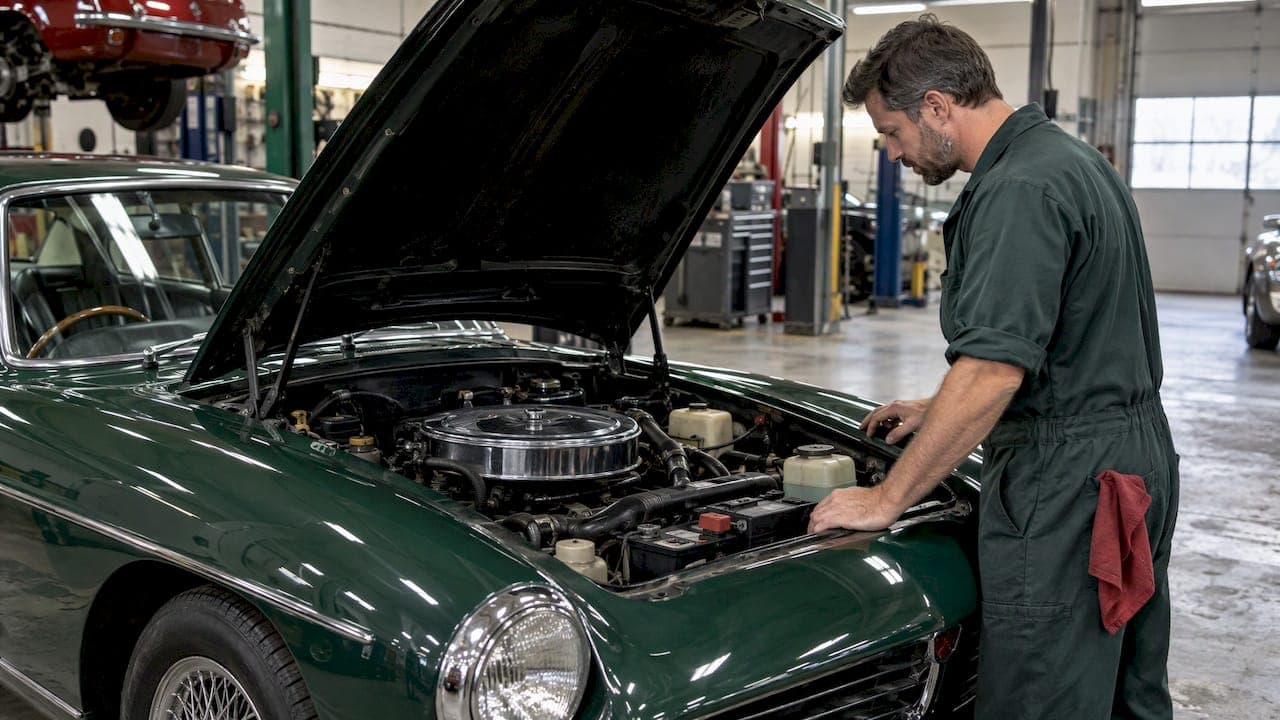
A car that has been sitting for months deserves extra attention before it loads. A weak battery or a seized brake is the most common reason a driver cannot move a car under its own power. Battery maintenance and fluid checks before shipping keep the loading step quick and safe.
Insurance: what to verify before the truck arrives
This is the part of classic auto transport where assumptions cost the most. According to the Motorious guide, federal rules set minimum financial responsibility for for-hire carriers, and for most non-hazardous property carriers operating larger vehicles that means liability coverage for bodily injury and property damage. It also notes, citing the FMCSA, that cargo insurance, the coverage that protects your vehicle itself, is not federally required for this category of carrier. Brokers must maintain a federally required surety bond or trust fund.
In plain terms, cargo coverage varies from carrier to carrier. Before you book, ask:
- What does the carrier’s cargo policy cover, and what is the limit?
- Is there a deductible, and how much?
- Does the policy apply to a car valued as a collectible?
- Can you get the certificate of insurance in writing before pickup?
- Is the quote from the carrier that will actually move your car, or from a broker who will assign it?
Then call your own insurer. Chubb advises contacting your insurance agent to confirm your policy covers a car in transit and to get a referral for a qualified, properly insured shipper using covered transport vehicles. Chubb also lists the security features a shipper should use: warning and anti-theft devices, immobilizing devices, GPS tracking, proper locks on enclosed trailer doors at all times, and security cameras. Asking a carrier about those is reasonable, and a good one will answer without hesitation.
If your classic is insured on an agreed-value policy, ask the agent whether that value applies during transit. Your agent can answer that for your specific policy, and no article can.
What affects the cost of shipping a classic car
No honest article can give you one price, because quotes move with the route and the season. What you can do is understand the levers so quotes compare fairly.
- Distance and route. Longer trips cost more in total but usually less per mile. Major corridors between big metro areas are easier to fill than rural pickups.
- Trailer type. Enclosed costs more than open, as the Motorious guide notes, because enclosed carriers move fewer cars per trip.
- Vehicle size and weight. A long-wheelbase sedan or a heavy truck takes more room than a roadster.
- Condition. A car that does not run needs a winch and extra handling.
- Timing. Peak seasons, such as spring show season and the winter snowbird migration to Florida and the Southwest, tighten capacity. Flexible dates give you leverage.
- Pickup access. A meet point at a large lot is easier than a tight street.
- Coverage. Higher cargo limits or added coverage can change the price.
On the popular question of what it costs to move a car about 1,000 miles: expect a range rather than a number, and be wary of any quote far below the others. An unusually low price on a collector car often means a broker is bidding to win the job and will look for a carrier later, which can mean delays or a rebid at a higher price.
When comparing, ask for each quote in writing with the same assumptions: enclosed or open, pickup window, delivery estimate, cargo limit and deductible, and what is included.
Choosing a carrier or broker
You will deal with two kinds of companies: carriers that own the trucks, and brokers that arrange the move and hire a carrier. Both can do a good job. What matters is transparency.
- Look up the company’s federal registration on the FMCSA’s public lookup and confirm the authority is active.
- Ask whether they are the carrier or a broker, and who will physically move the car.
- Ask how many collector cars they move enclosed in a typical month.
- Read the contract for cancellation terms, damage-claim deadlines and what happens if a delay occurs.
- Ask for references from owners of cars like yours, such as air-cooled Porsches, pre-war cars or wide-body exotics.
Do not pay a large deposit before you have a written agreement and the insurance details in hand.
Where the car goes after the ride: storage at the destination
Shipping is rarely the end of the story. Many collectors move a car at the start or end of a season: to a warmer state for the winter, home from an auction, or to a facility ahead of a long stretch without driving. The truck is one risk. The months afterward are another, because batteries drain, tires flat-spot, fluids age and moisture works on bare metal and leather.
That is where a purpose-built storage facility pays off. We built NapGarage around exactly that handoff. Our listed facilities offer climate-controlled storage for exotic, classic and collector cars, and the care that goes with it.
Promo: storage that picks up where transport ends
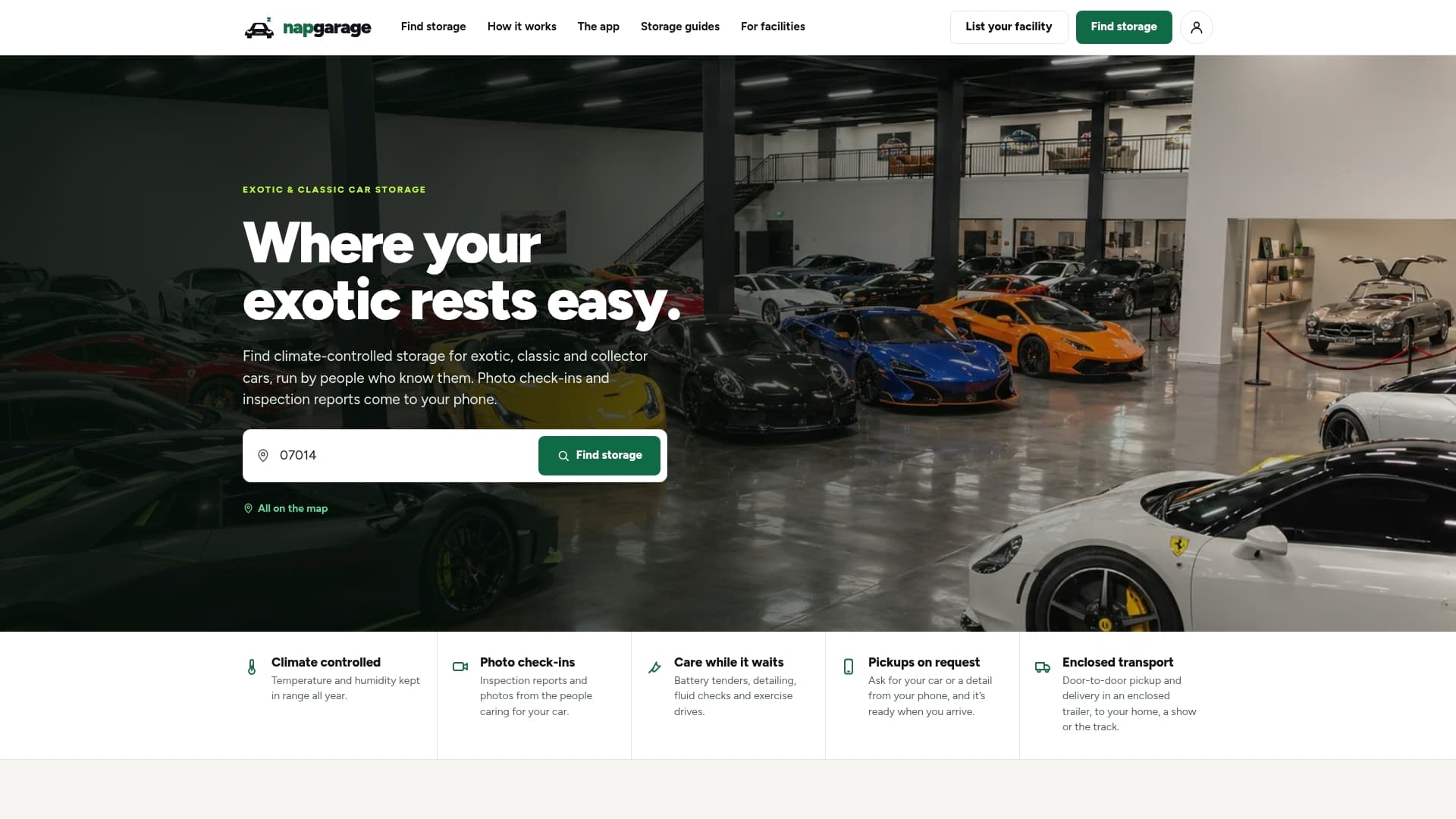
If your classic is arriving at a new address or sitting between seasons, NapGarage connects you with climate-controlled storage for exotic, classic and collector cars. Facilities on our marketplace can offer battery maintenance, detailing, fluid checks, exercise drives, inspection reports, photo check-ins and enclosed transport, and you can request pickups and details through the mobile app. Browse exotic and classic car storage by location and send a quote request to the facilities that fit your car.
If you already know where you are headed, go straight to a city page such as Los Angeles, Miami, Sterling, Virginia or Naples, Florida, or see the full list of car storage by city.
Our perspective
Transport and storage are two halves of the same job, and collectors usually treat them as separate. They book a truck for the move, then a space for the winter, and nobody looks at the car in between.
We think the better approach is to treat the car’s whole journey as one plan. Ship it enclosed. Have it received by someone who will document its condition on arrival. Then keep it in a climate-controlled space where it is looked after: the battery maintained, the fluids checked, the car exercised and detailed, and inspection reports and photos sent to your phone so you see what we see.
That is why NapGarage focuses only on enthusiast-grade storage. Our approach is designed around collectors who want to stay informed without driving to the facility, and who want pickups and updates handled from an app. We believe a car that arrives well and is kept well is the best protection for the money you have put into it.
Vitali
A practical timeline for your shipment
Planning backward from the day you need the car avoids rushed decisions.
- Four to six weeks out: decide enclosed or open, gather two or three written quotes, and call your insurance agent about coverage in transit.
- Two to three weeks out: book, confirm your pickup window, and arrange the destination, whether that is a home, a show venue or a storage facility with receiving hours.
- One week out: service anything that affects loading: battery, brakes, tires. Write up the quirks sheet.
- Day before: photograph and video the car, remove loose items and personal belongings, drop fuel to the level your carrier asks for, and gather the keys.
- Pickup: walk around with the driver, agree the condition report and keep your copy.
- Delivery: inspect in daylight, note any differences on the paperwork, then sign.
Leave extra margin if you are shipping for a specific event. Weather, mechanical delays and traffic can move a delivery by a day or more.
Common mistakes to avoid
- Assuming the carrier’s insurance covers everything. Verify the limit and deductible, as covered above.
- Skipping your own photos. The driver’s report is not enough on its own.
- Leaving a full tank. Extra fuel adds weight and risk, so follow the quarter-tank guidance.
- Leaving items in the trunk. They are generally not covered and can shift in transit.
- Not telling the carrier the car does not run. Surprises at pickup cause delays and extra fees.
- Choosing on price alone. A far lower quote often hides a broker markup, a vague window or thin coverage.
FAQ
Is enclosed transport worth it for a classic car?
For restored, show-quality, rare, high-value or original-condition cars, enclosed transport is the standard recommendation because it shields the car from rain, sun, hail, salt, debris and onlookers. Open transport can be reasonable for sturdy, regularly driven cars where road dust is not a worry. The right choice depends on what a chip or scratch would cost you.
Does the carrier’s insurance cover my classic car?
Not automatically. Federal rules do not require cargo insurance for this category of carrier, so coverage varies. Ask each company for its cargo limit, deductible and whether the policy applies to a collectible, and ask your own insurance agent whether your policy covers the car in transit.
How should I get my classic car ready for shipping?
Keep fuel at about a quarter tank or less, remove personal items and loose parts, secure convertible tops and windows, disable alarms and toll tags, and check tire pressure, battery and brakes. Note any leaks honestly, hand over one set of keys, and write down any quirks the driver should know.
What does door-to-door classic car shipping mean?
The truck picks up near your address and delivers near the destination, so you do not drive the car to a terminal. Large trailers cannot always fit on narrow streets, so you may meet the driver at a nearby parking lot. Confirm the plan in writing when you book.
Can I store my classic car right after it is shipped?
Yes. Many owners ship directly to a climate-controlled facility. Tell the carrier the delivery is to a storage site so receiving hours are respected, and ask the facility about intake inspection and photo reports. You can compare options on our storage listings.
Sources
- How to Ship a Classic Car You Bought Online, Motorious
- 7 ways to stop a thief from stealing your classic car, Chubb