Car Storage Photo Check Ins That Build Confidence

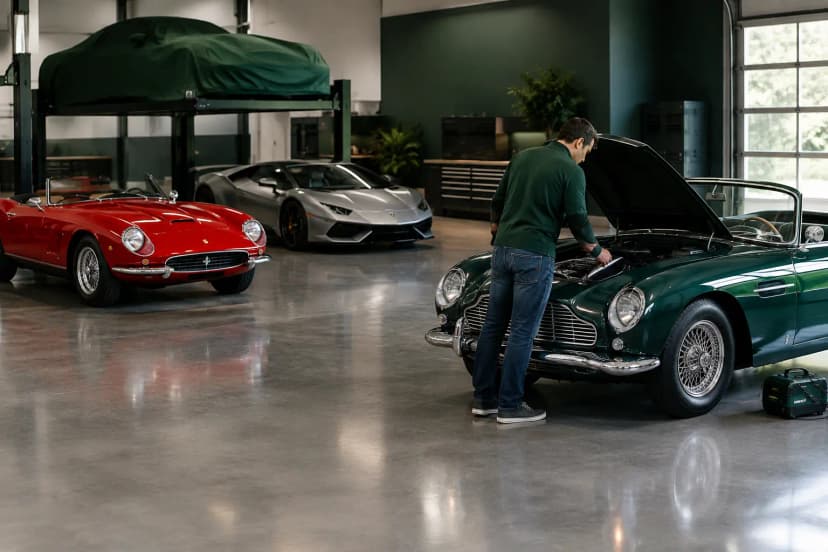
A collector car can look perfectly fine in a quick text photo and still need attention. A weak battery tender connection, a small fluid spot beneath the chassis, or a temperature reading outside the agreed range may not be obvious unless the check-in is designed to show it. That is why car storage photo check ins should be more than a courtesy snapshot. They should give you a clear, dated record of how your vehicle is being cared for while it is out of your garage.
For owners storing a Porsche for the winter, a Ferrari between events, or a classic that only comes out for concours season, remote visibility reduces one of the hardest parts of off-site storage: not knowing. The right reporting process lets you check on your car without driving over, while still keeping the facility team accountable to the care plan you approved.
What a Useful Car Storage Photo Check-In Includes
A useful check-in answers practical questions quickly: Is the car where it should be? Does the exterior still present properly? Is it on its tender? Has anything changed since the last inspection? A single wide photo taken from across the storage floor does not provide those answers.
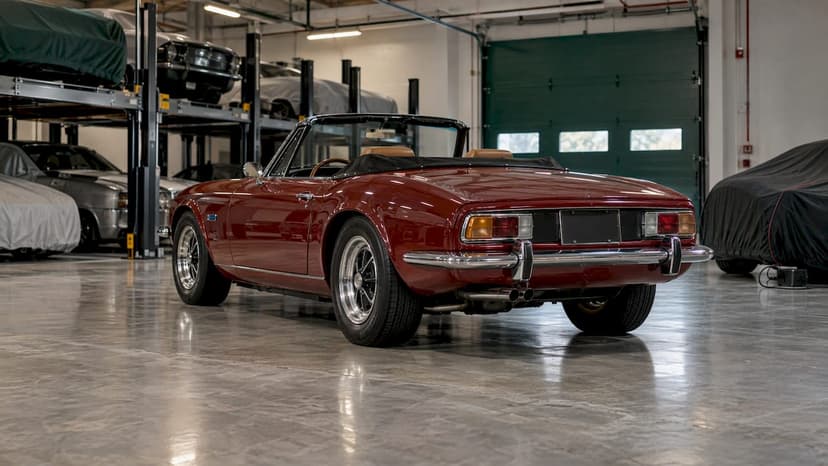
Start with clear exterior images. The report should show the vehicle from more than one angle, with enough detail to identify its condition. For a car stored under a cover, the facility may photograph the covered vehicle during routine checks and provide uncovered images at agreed intervals or before pickup. This is a reasonable trade-off. Frequent cover removal can create unnecessary handling, while an occasional uncovered inspection provides a better look at paint, trim, tires, and glass.
The photo set should also include the details that support preservation. That may mean a visible battery tender connection and status indicator, the odometer when an exercise drive has been performed, tire condition, and any inspection point the facility has identified. If the vehicle is stored in a climate-controlled area, a check-in should pair images with the actual temperature and humidity readings for the storage environment, rather than making a vague claim that the space is climate controlled.
Documentation matters as much as the images themselves. Each check-in should be date-stamped and tied to the correct vehicle. A report that says “all good” is reassuring only until there is a question about when a condition was observed or a service was completed. Precise records protect the owner and help the people caring for your car maintain continuity across shifts.
The Difference Between Photos and Active Oversight
Photos are evidence. Active oversight is the process behind them.
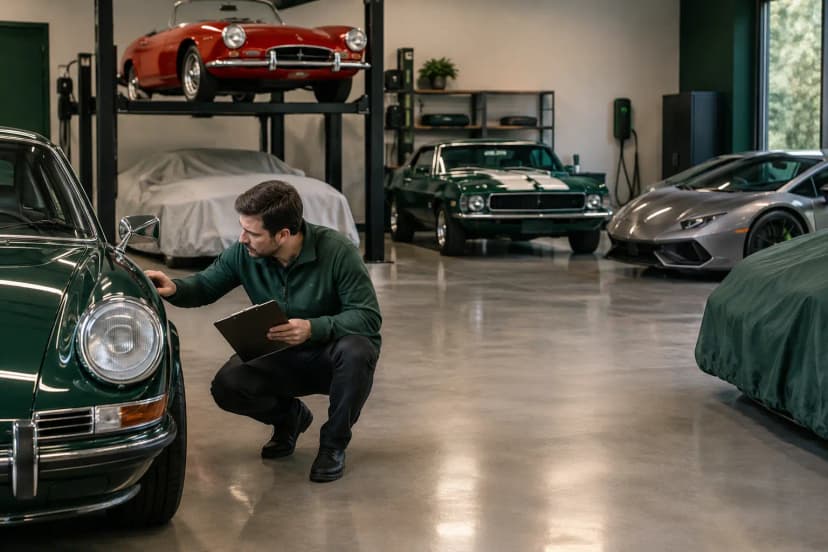
A well-run specialty storage facility follows an inspection routine, then uses photos to document the outcome. Depending on the vehicle and storage plan, that routine may include confirming the battery tender is functioning, checking for visible leaks, looking for tire pressure concerns or flat spotting, verifying that covers and window positions are correct, and noting any changes around the car.
Not every car needs the same schedule. A modern exotic on a properly managed tender may need a different approach from a carbureted classic, a vintage car with known seepage, or a track car arriving after a hard weekend. Cars with older electrical systems, delicate paint, specialized tires, or long inactivity periods benefit from a more tailored inspection plan. The key is to agree on what will be checked, how often it will be checked, and what requires your approval before work begins.
Exercise drives deserve the same clarity. They can be useful for certain vehicles, but they are not automatically the right choice for every collector car. A cold start and a short idle may create more problems than it solves, while an improperly planned drive can add avoidable risk. If a facility offers exercise drives, ask how it brings the car to operating temperature, documents mileage, checks weather and road conditions, and handles insurance. A post-drive photo check-in with the odometer, fuel level, and any observations gives the service a clear record.
Set the Reporting Frequency Around How You Use the Car
Weekly reports can be helpful for a newly delivered vehicle, a car awaiting transport, or a vehicle with a known concern. For stable long-term storage, monthly photo check-ins are often the better balance. They give you regular visibility without creating unnecessary disturbance around the vehicle.
Your reporting plan should change when the car’s role changes. If you are preparing for a show, sale, track day, or seasonal return home, ask for a pre-release inspection. This check-in should be more comprehensive than a routine update and should confirm the car is ready for the next step: battery condition, tire pressure, fluid observations, exterior presentation, fuel level if applicable, and any requested detailing or transport coordination.
It also helps to decide how exceptions will be handled. If a staff member sees a fresh drip, a low tire, a tender issue, or an exterior concern, you should receive an alert rather than waiting for the next scheduled report. The alert should explain what was observed, include a photo where useful, and distinguish between an issue that needs immediate action and one that can be monitored. Good communication is calm and specific, not alarmist.
What to Ask Before You Store
Before committing to a facility, ask to see an example of its actual check-in format. You are looking for consistency, not marketing photography. Can you tell when the report was made? Are temperature and humidity readings included where relevant? Does the facility document battery-tender status? Is there a place for technician notes and recommended next steps?
You should also ask who performs inspections and who can access your vehicle. A collector car storage operation should have a defined chain of custody, not an informal arrangement where multiple people move cars without records. Confirm how keys are secured, how vehicles are repositioned, and whether the facility photographs condition before and after enclosed transport, detailing, or service work.
Finally, establish approvals in advance. Some owners want a call before any action beyond a basic check. Others authorize routine battery-tender replacement, tire inflation, or detailing up to a set amount. Neither preference is wrong. What matters is that the facility knows your instructions and documents the work performed.
Make Each Check-In Easy to Review
The best reports are easy to scan on a phone but detailed enough to be useful months later. A consistent format helps: the vehicle name and date first, followed by storage readings, a short condition note, supporting photos, and any recommended action. If there is no issue, the report should still say what was checked.
For example, “Battery tender connected and charging normally; no visible fluid leaks; tires visually normal; storage area recorded at 68°F and 47% relative humidity” is far more useful than “Car checked.” It tells you what the team observed without forcing you to interpret a dozen images on your own.
Keep your own delivery photos as a baseline, especially for cars with low front splitters, delicate wheels, original trim, or documented concours condition. The facility’s intake process should complement that record with mileage, fuel level, visible condition notes, and any existing marks. This establishes a shared reference point before the first routine check-in arrives.
Remote Confidence Is Built on Specifics
Car storage photo check ins work when they are part of a real operating routine, not a substitute for one. Images, readings, inspection notes, and prompt exception alerts create a practical record of care between visits. They also make pickup simpler because you can request detailing, service, or enclosed transport with a current view of the vehicle’s condition.
NapGarage helps owners compare specialized storage options where these details are part of the conversation, from climate management and inspection reporting to ready-on-arrival pickup. The right facility should not ask you to simply trust that your car is fine. It should make it easy to see how it is being cared for, then have it ready when the next drive, show, or event calls.