Exotic Car Detailing: What It Takes and How to Keep It Lasting

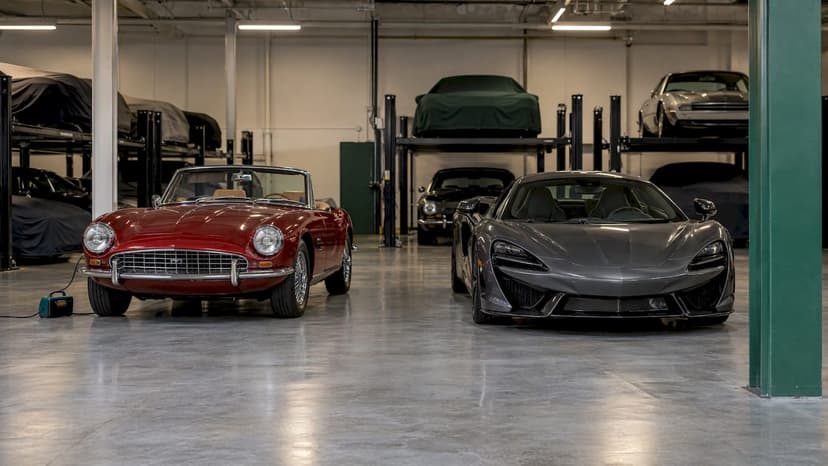
Exotic car detailing is slow, hand-done work: gentle washing, careful interior cleaning and paint protection matched to the car’s age and finish. A detail only lasts if the car then sits somewhere clean, dry and climate-controlled. The best result comes from pairing the detail with a storage facility that handles it. At NapGarage, we built our listings around climate-controlled storage with detailing, battery maintenance, fluid checks and exercise drives, so the work you pay for is not undone by a damp garage and a cover full of dust.
NapGaragenapgarage.comKeep Your Detail Looking Its BestNapGarage pairs climate-controlled storage with detailing and ongoing car care, helping protect exotic and classic vehicles between visits.VisitKey Takeaways
- Exotic and classic cars need hand washing with microfiber and products suited to their paint, never automatic washes.
- Never put a dirty car into storage: grime trapped under a cover acts like sandpaper on the paint.
- A detail before storage is one step in a list that also covers fuel, battery, tires and fluids.
- Humidity and temperature control protect a detail longer than any wax or coating can on its own.
- Storage that includes detailing, photo check-ins and inspection reports keeps the car looking right without trips to the facility.
Table of Contents
- What makes exotic car detailing different from a car wash
- Detailing a classic car: older paint, trim and materials
- Detailing a car before storage
- Detailing a car while it is in storage
- What to check when arranging detailing for an exotic or classic
- Promo: detailing and storage in one place
- Our perspective: a detail is only as good as where the car sits
- FAQ
- Sources
What makes exotic car detailing different from a car wash
A drive-through wash is built for speed and volume. Exotic detailing is built around the single car in front of the detailer. Exotic paint can be soft, low-volume or hand-finished. Carbon fiber, matte finishes, alcantara and delicate leather each need their own products. On a classic, the paint may have no modern clear coat at all, and the chrome, vinyl and emblems may be decades old.
The biggest difference is contact. Hagerty advises hand-washing a classic with microfiber cloths or a sheepskin mitt, because automated washes, even soft-touch ones, can scratch vintage paint or damage emblems and trim. The same logic applies to a newer exotic with a perfect finish: every swirl mark you avoid is a correction you never pay for.
A proper detail usually has four parts:
- Wash and decontaminate. A pH-balanced shampoo, a soft mitt and the two-bucket method, so dirt picked up from the car never goes back onto the paint.
- Polish only as much as the paint needs. For older finishes, the goal is enhancement, not heavy correction. A mild polish by hand or with a dual-action polisher on a low setting is the safe approach.
- Protect. Many classics lack a modern clear coat, so carnauba-based waxes or sealants made for older finishes are the right fit. Hagerty’s guide says the same about products made for older vehicles, including cleaners for vintage paint and specialty products for vinyl and convertible tops.
- Clean the interior without soaking it. Spray cleaner onto the towel rather than the surface, and test a small hidden area first. Tim McNair’s prep guide recommends exactly that for seats, door panels and dash, plus checking carpets and seats for mold or mildew.
Detailing a classic car: older paint, trim and materials
Classic car detailing is gentler and more conservative than exotic detailing. Original paint, original leather and original fabric may be the only surviving example of how the car left the factory. The National Park Service’s guidance on preparing historic vehicles warns against reupholstering a car that still has its original upholstery, because early fabrics and leathers are hard to match, and suggests slipcovers instead (NPS Conserve O Gram 10/3).
That shifts the questions to ask before anyone touches the car:
- Is the paint original or repainted, and does it have a clear coat?
- Are there vinyl or convertible tops that need dedicated products?
- Is the leather original and in need of conditioning rather than cleaning?
- Are there emblems or trim pieces that are loose or fragile?
How often to do it depends on use. Hagerty says a classic driven regularly should be washed at least every couple of weeks, or weekly where road salt and sand are common. A thorough interior clean every three to six months is usually enough, though monthly interior work is not unusual for a heavily used car (Hagerty). A car in storage is on a very different schedule, which is where most owners go wrong.
Detailing a car before storage
The detail you do before storage is the most important one of the year. Chemical Guys, a car-care product maker, makes the point bluntly: never store a dirty car, because dust and grime trapped under a cover act like sandpaper on paint. So wash, wax and wipe down the interior before the car is put away.
In practice the pre-storage detail looks like this:
- Wash by hand and dry completely. Trapped water is the enemy in a closed space.
- Apply wax or sealant. Choose one suited to the paint’s age.
- Clean and dry the interior. Hagerty’s Grace Jarvis notes that moisture from the driver’s shoes can get under the carpet and cause mold, or become trapped against the sheetmetal and start rust. Dry the driver’s-side carpet or prop it up before long storage (Hagerty, December 2024).
- Treat leather. Classic DeLorean Motor Company suggests a high-quality leather preservative before storage.
- Cover the car with something breathable. Progressive’s classic car guidance calls for a fitted breathable cotton or flannel cover, not plastic that holds moisture against the paint.
The mechanical checklist that goes with it
The detail is only the cosmetic half. Several sources agree on the mechanical half:
- Fuel. Hagerty recommends ethanol-free fuel or fuel treated with a stabilizer. Classic DeLorean says to circulate stabilizer for 5 to 10 minutes, and to drain fuel if storage will run beyond six months.
- Oil. Change the oil and filter before storage, then drive roughly a dozen miles to work fresh oil through the system, according to Progressive.
- Tires. Hagerty says flat spots can develop within a year, so the car should be raised on jack stands or tire cradles. Inflating to the sidewall maximum is another common recommendation.
- Battery. Use a battery maintainer, not a plain trickle charger. DeLorean explains that if a charger malfunctions, the battery can boil over and acid can ruin large areas of carpet. In freezing conditions a discharged battery can freeze and push out acid, which is why it advises removing the battery below freezing. For a hybrid held 30 days or more, Ford’s owner guidance calls for about a 50% hybrid battery charge and disconnecting the 12V battery.
- Lithium batteries. A Scottsdale collector-car storage guide notes that the wrong charger will damage a lithium battery, so the maintainer has to match the battery chemistry (Elite Concierge AZ).
Check your owner’s manual for anything specific to your car, especially for hybrids, supercars with complex electronics and anything with a sealed battery system.
Detailing a car while it is in storage
A question many owners have: should you detail a stored car, and how? A car that is not driven does not collect road film, but it does collect dust, moisture and sometimes pests. The goal in storage is to keep the finish unchanged, not to keep scrubbing it.
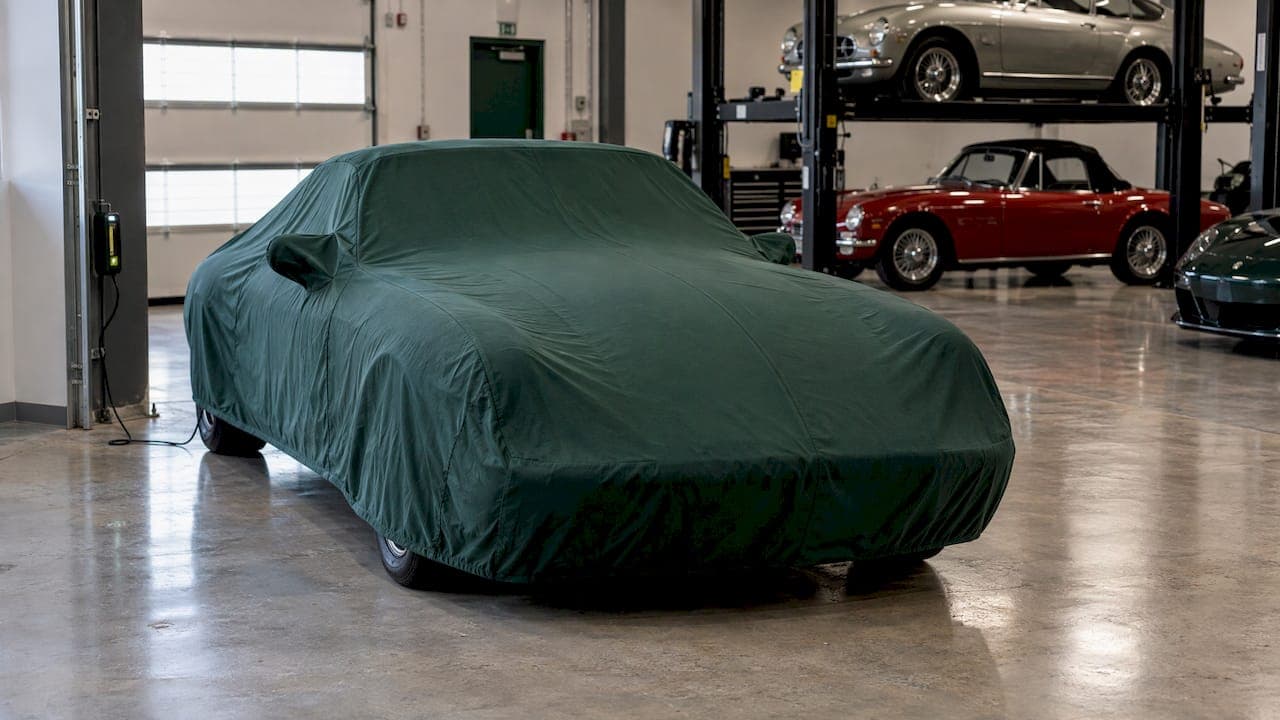
The environment does most of the work. Hagerty says the best storage is a clean, dry place with temperature and humidity control (Hagerty). Humidity is the variable that most often defeats a good detail, since damp air feeds mold in carpets, rust under mats and cloudy chrome. Our guide to what humidity level is best for car storage goes through the numbers.
Some other habits that protect a detail:
- Light. The NPS recommends keeping interior light levels low, around 50 lux for the most sensitive organic materials, turning lights off when nobody is present, and keeping doors closed and locked (NPS).
- Pests. The same document suggests a sticky trap under a seat to monitor for insects or rodents.
- Movement. DeLorean advises moving the car a foot or two each month, and if a cover is used, uncovering and cleaning the car every six months.
- Looks are half the story. The NPS conservator behind that guidance points out that appearance is only half of preservation: mechanical and functional parts are often overlooked.
When the car comes out of storage, Tim McNair’s prep guide lists the first-drive checks: inspect for leaks and sticking brakes, check all fluids, check tire pressure including the spare, and look at sidewalls for dry rot or bubbles (Hagerty). Classic Cars Arena adds a check for rodent nests before starting the engine in spring.
What to check when arranging detailing for an exotic or classic
Whether you are booking a detail before storage or a regular service, a few questions separate a careful operation from a quick one:
| Question | What a good answer sounds like |
|---|---|
| How is the car washed? | Hand wash with clean microfiber and a pH-balanced shampoo, never an automatic wash. |
| What will you use on the paint? | Products chosen for the car’s age and finish, with mild polishing only if needed. |
| How is the interior cleaned? | Cleaner applied to the towel, a hidden-spot test first, and care with original leather and fabrics. |
| Where does the car wait afterward? | Indoors, climate-controlled and secure, not outside or in a shared warehouse. |
| Will I see what was done? | Photos and a written report, so you know the condition before and after. |
| Who moves the car? | Enclosed transport if it has to travel, plus a clear record of pickup and return. |
The last three rows matter as much as the first three. A perfect detail followed by a dusty carport is wasted money, and a detail you cannot verify leaves you guessing. If you are in a region with hot, humid summers or salted winter roads, ask how the facility handles moisture and how often the car is checked.
Promo: detailing and storage in one place
On NapGarage, you can find and compare climate-controlled storage facilities for exotic, classic and collector cars. Listings include services such as detailing, battery maintenance, fluid checks and exercise drives, along with inspection reports and photo check-ins sent to your phone, enclosed transport, and pickup requests through a mobile app. That means the car you had detailed stays that way, and you can see its condition without driving to the facility.

Start with all exotic and classic car storage, or browse by city if you want something close to home: Miami, Los Angeles, San Diego and Philadelphia are among the markets listed, and the full city list covers the rest. Our guide on how to choose, prepare and budget for classic car storage walks through the decision in more detail.
Our perspective: a detail is only as good as where the car sits
Most owners think of detailing as an event. You book it, the car comes back gleaming, and the work is done. With a collector car, we see it differently: detailing is one piece of a continuous care routine.
The paint, leather and chrome you just paid to perfect are exposed to humidity, dust and temperature swings the moment the car goes back to a garage that was never designed for it. That is why we focus only on enthusiast-grade storage. Climate control, detailing, battery maintenance, fluid checks and exercise drives belong together, because each one protects the others.
The other half is information. An owner should not have to drive to a facility to find out whether the car is fine. Inspection reports and photo check-ins to your phone, and pickup requests through the app, mean you stay informed and in control while the car is looked after.
If you own an exotic or classic, ask where the car will be between details, who will look at it, and how you will be told. Those answers decide how long your detail lasts.
NapGarage Team
FAQ
How often should an exotic car be detailed?
A regularly driven classic should be washed at least every couple of weeks, or weekly where road salt and sand are common, per Hagerty. A full interior clean every three to six months is usually enough. A stored car needs far less: one thorough detail before it goes in and another when it comes out.
Can I take an exotic or classic car through an automatic car wash?
It is not recommended. Hagerty warns that automated washes, even soft-touch systems, can scratch vintage paint or damage emblems and trim. Hand washing with microfiber or a sheepskin mitt is the safer choice for any collector car.
Should I wax a car before storing it?
Yes. Wash it, dry it completely and apply a wax or sealant suited to the paint’s age before it goes under a cover. Dirt trapped under a cover can scratch the finish, so the car should go into storage clean and protected.
Do I need climate control for a detailed car in storage?
It protects the detail best. Hagerty describes clean, dry storage with temperature and humidity control as the ideal. Moisture is what causes mold in carpets, rust under mats and dulled trim, so controlling humidity keeps the finish and interior in the condition you left them.
What should I do before the first drive after storage?
Check for leaks and sticking brakes, check all fluids and tire pressure including the spare, and inspect sidewalls for dry rot or bubbles. Look for rodent nests before starting the engine, then move the car slowly at first.
Sources
- Classic Car Detailing: Everything You Need to Know, Hagerty
- Tim’s Prep School, Hagerty Media
- What Happens When Cars Sit?, Hagerty Media
- Conserve O Gram 10/3: Preparing Historic Vehicles, National Park Service
- Classic Car Detailing, Chemical Guys
- Long Term Storage, Classic DeLorean Motor Company
- Classic Car Storage Tips, Progressive
- Storing Your Vehicle, Ford Owner Manual
- Collector Car Summer Storage Protocol, Elite Concierge AZ