Detailing While Your Car Is Stored Safely
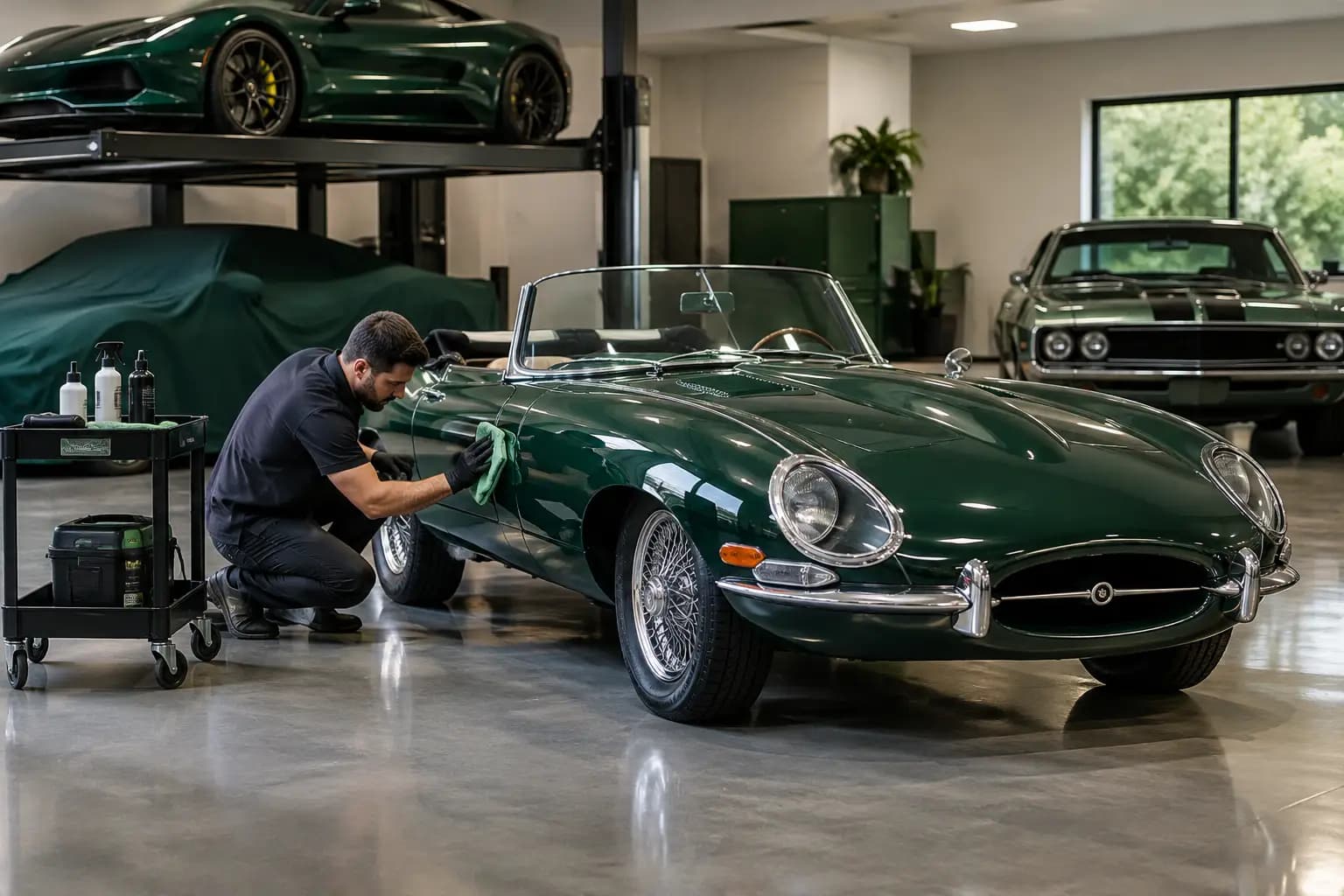
A collector car can come out of storage mechanically sound and still look neglected. A thin film of dust on a black Porsche, water spotting after an enclosed transport, or fingerprints left during a monthly inspection can undermine the ready-on-arrival experience. Detailing while your car is stored is not about making the vehicle look freshly prepped every week. It is about controlling the small cosmetic issues that become harder, riskier, and more expensive to correct later.
The right plan depends on how long the vehicle will be stored, how it is used between visits, the facility environment, and the condition of its paint, interior, and protective coatings. The goal is preservation first, appearance second - with a documented process that does not introduce moisture, scratching, overspray, or unnecessary handling.
Detailing While Your Car Is Stored: The Right Scope
Storage detailing should be lighter and more deliberate than a full retail detail. A vehicle sitting in a clean, climate-controlled space does not need repeated washes or aggressive paint correction. In fact, performing either without a real need can create avoidable risk.
Think in three levels. The first is condition-preservation work: careful dust management, glass cleaning, vacuuming, inspection of leather and trim, and removal of isolated marks. The second is event preparation: a full exterior wash, wheel cleaning, interior refresh, and final presentation before a show, drive, sale photo session, or delivery. The third is corrective work, such as polishing, spot sanding, coating application, or stain treatment. This level should be planned as a separate service with clear approval, appropriate lighting, and enough time for proper curing.
A good storage facility treats these as distinct requests. That distinction protects the car and keeps you from paying for a complete detail when a targeted service will do.
Start With a Clean Baseline at Check-In
The best time to plan storage detailing is before the car is parked. A proper intake condition report, supported by date-stamped photos, establishes what the vehicle looked like upon arrival. It also gives the facility team a reference if they notice a new drip, dust accumulation, bird residue after transport, or a mark that needs your review.
Before long-term storage, the exterior should be washed and fully dried, including wheel barrels, jambs, lower rockers, and the area behind the license plate. Road film left on paint or polished metal can become more stubborn over time. Brake dust is equally worth addressing before storage, especially on cars with intricate wheels or carbon-ceramic brake packages where careful product selection matters.
Inside, remove food, moisture-holding floor mats, and anything that can leak, melt, or off-gas. A light vacuum and a measured application of the correct leather conditioner may be appropriate, but avoid soaking seats or trim. Premium interiors tend to age better with restraint than with heavy, glossy dressings.
If the car wears paint protection film, a ceramic coating, matte paint, satin vinyl, polished aluminum, or delicate single-stage paint, record that at check-in. These surfaces do not share one universal detailing process. A product that is harmless on a modern clear coat may change the appearance of a matte panel or leave residue in the edges of paint protection film.
When a Stored Vehicle Actually Needs Detailing
Most stored cars do not need a recurring full detail. They need inspection and intervention when a specific condition calls for it.
A detail is often worthwhile before an owner pickup, an enclosed transport departure, a concours event, a dealership appraisal, or photography for a private sale. It can also make sense after an exercise drive. Even a short drive can leave tire dressing sling, insects, road dust, brake residue, or moisture in wheel wells. Letting those materials sit for months defeats the purpose of careful storage.
For a car that remains stationary in a well-managed facility, a light refresh every few months may be enough. A facility with controlled temperature, stable humidity, filtered or low-dust air, vehicle covers used correctly, and limited traffic around the car will reduce the need substantially. A car in a busy shared garage, near a service bay, or stored through an active construction season may need more attention.
The key is not to mistake visible dust for permission to wipe the paint dry. Dust contains abrasive particles. Dragging a microfiber towel across a dry panel can create the fine marring that is most obvious in sunlight on dark colors. If the vehicle needs exterior cleaning, the detailer should use a process appropriate to the contamination level, ideally in a designated wash or detailing area rather than between stored vehicles.
What Can Be Done Safely in the Storage Space
Some cosmetic care can be completed at the parking space with minimal disruption. Cleaning interior glass, vacuuming carefully, removing a fresh fingerprint from a door sill, checking for pests, and inspecting leather or alcantara are reasonable examples. So is gently cleaning a small, isolated spot when the technician has the right materials and the surface is clearly understood.
The facility should use clean tools reserved for your car, not a towel that has touched wheels, engine bays, or another vehicle. That sounds basic, but cross-contamination is one of the easiest ways to introduce grit or silicone residue to valuable paint and interiors.
More involved work belongs in a controlled detailing bay. Exterior washing, wheel cleaning, iron decontamination, polishing, steam work, carpet extraction, and coating application all require space, drainage, lighting, ventilation, and time. Bringing large amounts of water into a storage area can raise humidity around other vehicles, while aerosol products and polish dust can travel farther than expected.
For vehicles stored under a cover, the cover should be removed and reinstalled only by someone who understands the material and fit. A dusty cover can scratch paint during removal. A cover installed over a damp vehicle can hold moisture against the finish. The car should be completely dry and cool before it is covered again.
Approve the Process, Not Just the Price
A request that simply says “detail my car” leaves too much open to interpretation. For a high-value vehicle, ask for a defined scope before the work begins. The scope should identify whether the service is a maintenance clean, an event prep, or corrective work; where it will be performed; what products or methods will be used; and whether the vehicle will need to be moved.
Request before-and-after photos for any meaningful service. Photos are useful beyond appearance. They can show that wheels, paint, glass, interior surfaces, and trim were addressed, while giving you a record of condition without requiring a trip to the facility.
It is also reasonable to specify no machine polishing, no tire shine, no fragrance products, no engine-bay cleaning, or no dressing on matte surfaces unless you approve it. Many collectors have preferences that are not obvious from the car itself. A concours car may require a very different finish than a track-driven GT car, and both deserve a team that follows the owner’s standards.
Match Detailing Frequency to the Car’s Real Life
There is no universal calendar for storage detailing. A car stored for winter and collected for a spring drive may need one baseline detail at arrival and one departure preparation. A vehicle that leaves monthly for exercise drives may benefit from a quick post-drive inspection and cleaning as needed. A concours entrant may require more frequent, tightly controlled presentation work in the weeks before an event.
Use the storage period to schedule care around actual moments that matter: transport pickup, a return from service, an upcoming show, a buyer viewing, or your own arrival. This avoids routine work for routine work’s sake.
Facilities listed through NapGarage can be compared not only by climate control and access, but also by whether detailing, inspection reporting, exercise drives, and enclosed transport can be coordinated through the people caring for your car. That operational visibility matters when you are traveling or managing more than one vehicle.
Detail Work That Usually Should Wait
Some services are better completed before storage or immediately before delivery rather than midway through a long storage term. Extensive paint correction is one example. It creates dust, requires close inspection under proper lighting, and often needs a follow-up wash or panel wipe. Ceramic coating installation also demands controlled preparation and cure conditions that should be confirmed in advance.
Deep interior shampooing and carpet extraction deserve similar caution. Moisture left in carpet backing, seat foam, or a trunk liner has no place in a stored collector car. If a spill or odor requires treatment, the facility should be able to move the car to a suitable area and verify that the interior is fully dry before it returns to storage.
Engine-bay detailing can be valuable before an event or sale, but it is not a casual add-on. Water around aging connectors, exposed carburetion, aftermarket wiring, or delicate underhood finishes creates a different risk profile from a modern daily driver. The same goes for undercarriage cleaning on classics with original coatings or preserved hardware.
A well-kept stored car should not look as though it has been handled constantly. It should look calm, dry, clean, and ready when you ask for it. Set the baseline at check-in, approve targeted work when the condition warrants it, and expect photos and clear communication before the keys are handed back.