Enclosed Transport for Car Shows Done Right
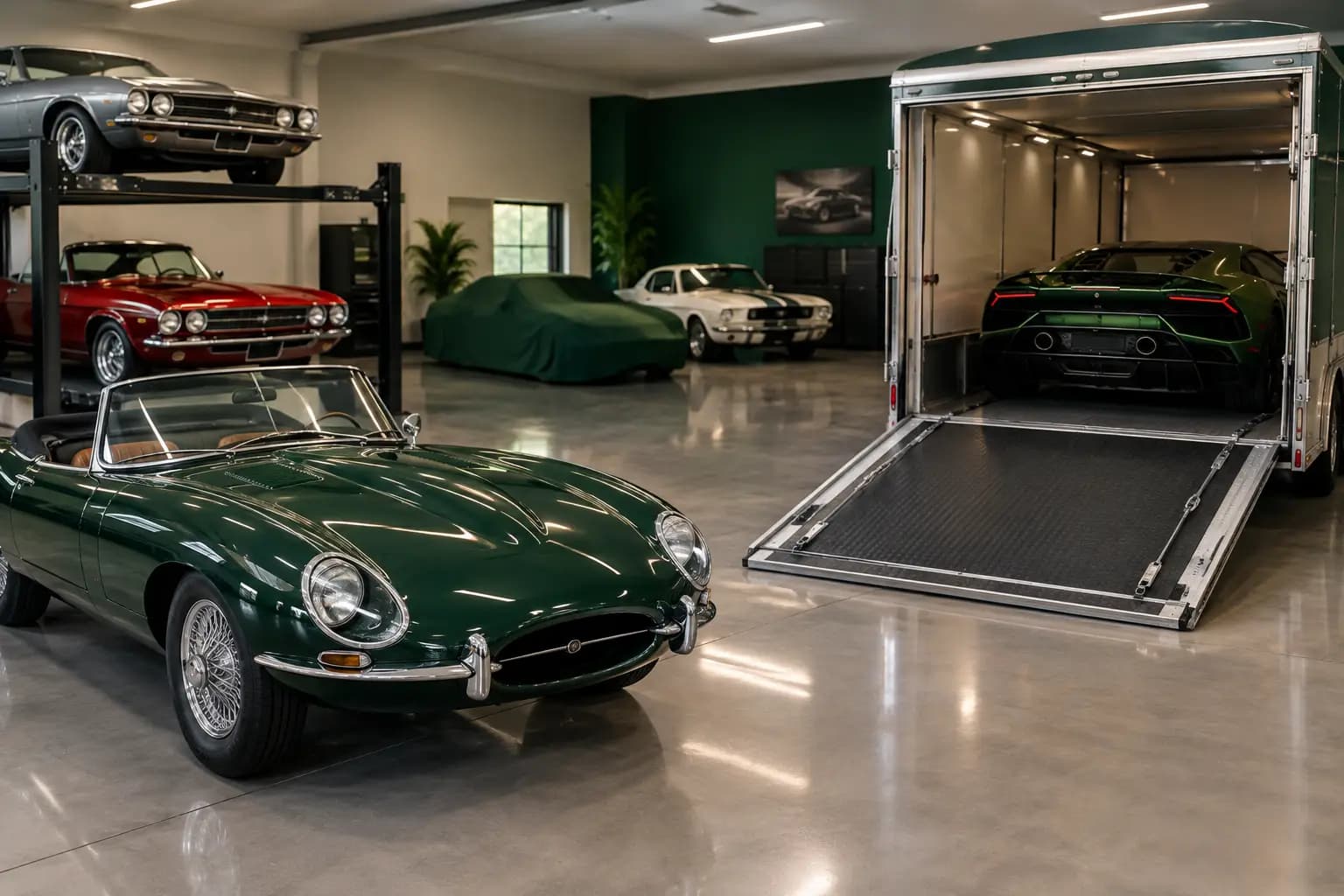
A show car can be mechanically perfect and still arrive looking wrong. A surprise rainstorm, road grit on a fresh correction, a loose strap mark, or a late pickup can turn a carefully planned event into a rushed compromise. That is why enclosed transport for car shows is not simply a shipping decision. It is part of how you preserve presentation, protect condition, and make sure the car is ready when the gates open.
For an exotic, classic, or collector vehicle, the best transport plan begins before the trailer arrives. It accounts for the car's clearance, finish, starting condition, event schedule, storage needs, and the person responsible for receiving it. The goal is straightforward: your car leaves in documented condition and arrives prepared for the show, not merely delivered to the address.
Why enclosed transport for car shows earns its place
Open transport can be appropriate for ordinary daily drivers and flexible schedules. For a vehicle headed to a concours lawn, club display, auction preview, or judged indoor show, the trade-offs are different. An enclosed trailer shields the car from weather, road debris, brake dust, curious bystanders, and the extra cleanup that comes with exposure on a long interstate run.
It also offers more discretion. That matters when a vehicle has significant value, a rare specification, or an owner who prefers not to advertise its movements. Enclosed carriers are not invisible, and no form of transport eliminates every risk, but a professional enclosed move reduces unnecessary exposure during one of the most vulnerable parts of a show weekend.
The trailer itself matters as much as the word “enclosed.” Ask how the carrier handles low-clearance cars, whether it uses liftgate loading when appropriate, what tie-down method is used, and whether soft straps are positioned around the tires rather than over suspension components. A split-level trailer may be efficient for the carrier, but it is not automatically right for every car. Long overhangs, front splitters, low exhaust systems, and vintage brakes all deserve discussion before dispatch.
Start with the show schedule, then build the move
The calendar is the first operational detail to settle. Many owners book transport based on the public opening time, then discover that vehicle placement happens a day earlier or within a narrow load-in window. Indoor shows may require advance credentials and staged arrival periods. Outdoor events may ask exhibitors to be positioned before spectators arrive, sometimes well before sunrise.
Work backward from the required arrival time. Include unloading, check-in, a short inspection, final detailing, and any time needed to position the car. For a local show, that margin may be a few hours. For an interstate event or a multi-car carrier route, build in more room. Weather, traffic, prior pickups, and mechanical issues with another load can change an otherwise sound schedule.
A useful plan identifies three points: the pickup window, the target delivery window, and the latest acceptable arrival. The last point is especially valuable when a carrier is routing multiple collector cars. It gives the transporter and the receiving team a clear decision point if the schedule starts to move.
If your car is coming out of seasonal storage, do not schedule pickup as the first time anyone has seen it in months. Arrange a pre-transport inspection and readiness check several days ahead. Confirm battery-tender status, tire pressures, fluid levels, warning lights, and whether the vehicle starts, moves, and brakes normally. This avoids discovering a weak battery or a stuck parking brake when the trailer is waiting at the curb.
Choose a carrier based on the car and the event
Price matters, but the lowest quote can hide meaningful differences in handling, timing, coverage, and communication. A carrier specializing in collector vehicles should be willing to discuss the actual vehicle, not just provide a generic rate by ZIP code.
Ask whether the move is dedicated or part of a consolidated route. Consolidated enclosed transport is often the more economical choice and can work well when your dates are flexible. A dedicated move provides more control over pickup and delivery, which can be worthwhile for a tightly scheduled show, a freshly restored car, or a vehicle that cannot sit outside while awaiting its slot.
Clarify who is physically transporting the vehicle. Some companies operate their own equipment; others arrange the move through a carrier network. Either model can work, provided responsibilities are clear. You should know the carrier's insurance information, cancellation terms, expected pickup communication, and the procedure if the delivery appointment changes.
It is also worth asking about loading conditions at both ends. A residential street with low trees, tight turns, or neighborhood restrictions may not accommodate a large enclosed rig. The show venue may have a separate marshalling area away from the display entrance. In those cases, a nearby safe meeting location or a facility-to-venue transfer can prevent last-minute improvisation.
Document the car before it leaves
Condition documentation is your baseline. It protects both the owner and the carrier, and it keeps small questions from becoming large disagreements. Take clear, time-stamped photos in good light before pickup, including each corner, wheels, windshield, roof, front fascia, rear fascia, interior, odometer, and any existing imperfections.
Do not rush the bill of lading. Walk around the car with the driver and make sure pre-existing chips, scratches, paint protection film seams, or wheel marks are noted accurately. If the car has special operating needs, put them in writing. That might include a battery cut-off location, immobilizer procedure, lift points, door release instructions, or a warning that the car has a low front lip.
Remove loose items from the cabin and trunk unless they are essential to the event. Show boards, tools, chargers, trophies, and personal items can shift in transit or complicate an insurance claim. Keep a small, labeled kit with the keys, event credentials, wheel-lock socket, and any instructions the receiving person will need.
For cars with covers, make an intentional choice. A soft, clean cover may help during indoor staging, but it should not be used as a substitute for careful securement. If it is used in transit, confirm that it is clean, properly fitted, and unlikely to rub against the finish. A cover that flaps or traps grit can create the very paint issue it was meant to prevent.
Make delivery part of your show-prep process
A car can arrive safely and still need attention before display. Plan for a delivery inspection before the transporter departs, then schedule a final presentation check. Look for fresh marks, but also inspect tire pressures, battery voltage, windshield clarity, brake dust, and any fluid odors or warning indicators. Photograph the car again once it is unloaded.
If delivery occurs at a storage facility, the team can give the car a controlled place to rest before the event rather than leaving it at a hotel lot or venue perimeter. Climate-controlled storage is particularly useful when weather is humid, freezing, or unpredictable, and when an event requires a next-day load-in. A proper facility can coordinate detailing, battery support, and ready-on-arrival pickup so the transport schedule does not force you to manage every handoff in person.
NapGarage helps owners compare specialized storage facilities that can support these handoffs with enclosed transport coordination, inspection updates, and care services. The point is not to add another stop. It is to create a documented chain of custody between where the car rests and where it will be shown.
Understand what affects the quote
Enclosed transport pricing is influenced by distance, route demand, vehicle size, timing, accessibility, and whether the carrier is moving multiple vehicles. A large vintage coupe, lifted SUV, or vehicle that occupies unusual trailer space may cost more than a compact sports car. Urgent scheduling, dedicated service, liftgate requirements, and difficult pickup locations can also affect the rate.
Avoid treating an estimate as complete until you understand what it includes. Confirm fuel surcharges, storage or wait-time charges, cancellation terms, and whether the quoted insurance coverage is adequate for the vehicle's declared value. If the car needs to be stored before or after the event, price that care separately rather than assuming a carrier can hold it securely.
The less expensive option is not always the wrong option. If your car is a reliable driver, the event is nearby, and you have schedule flexibility, consolidated enclosed shipping may be a sensible fit. If the car is irreplaceable, freshly restored, or needed at a precise time, paying for greater control is often easier to justify.
The best show-day transport plan leaves enough margin for people to do careful work. Give the carrier accurate information, give the receiving team authority to inspect the car, and give yourself time for the last details that make a collector vehicle feel ready to be seen.