How to Store a Classic Car: Step-by-Step Guide
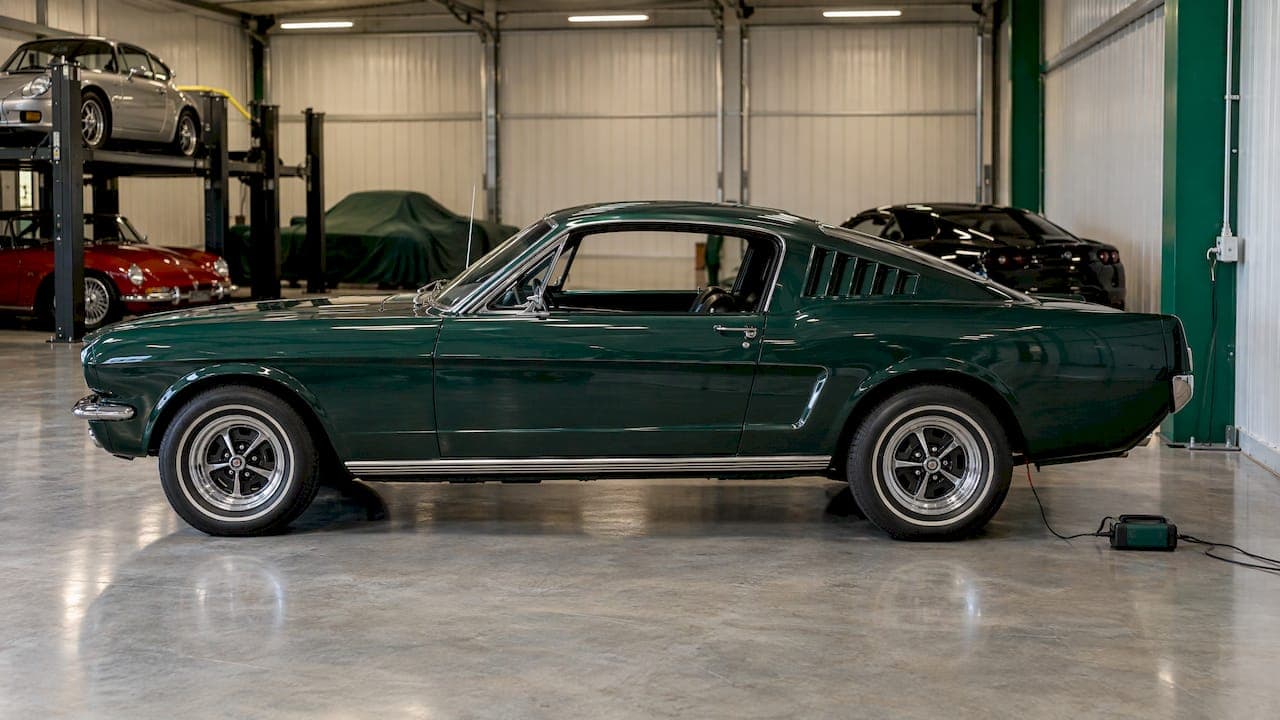
A classic car stores well when it sits in a clean, dry, climate-controlled space, goes in with fresh fluids, a stabilized fuel system, a battery on a maintainer and properly inflated tires, and gets checked on a regular schedule while it waits. The prep takes an afternoon. The hard part is the months that follow: someone has to watch the battery, the moisture, the tires and the mice. That is why many collectors hand the car to a specialty facility that does the routine and sends photo check-ins, and why we built NapGarage around that kind of care.
This guide covers the full routine, from choosing the space to waking the car in spring, and shows where each step goes wrong.
NapGarageKeep Your Classic Car Cared ForNapGarage offers climate-controlled storage with battery maintenance, fluid checks, exercise drives, and photo check-ins sent to your phone.VisitKey Takeaways
- Temperature swings create condensation, and condensation is where corrosion starts, so a stable, dry, enclosed space matters more than any single prep step.
- Fuel, battery, tires and brakes are the four systems that fail first in a car that sits. Treat each one before the car is parked.
- Use a battery maintainer, not a plain trickle charger, and park with wheel chocks rather than the parking brake engaged.
- A stored car still needs a check every few weeks: moisture, battery, tires, cover and rodent signs.
- If you cannot do that routine yourself, a climate-controlled facility with battery maintenance, fluid checks, exercise drives and photo reports covers it.
Table of Contents
- What Happens to a Classic Car That Sits
- Step 1: Choose the Right Space
- Step 2: Fix Problems and Wash the Car
- Step 3: Treat the Fuel System
- Step 4: Refresh the Fluids
- Step 5: Protect the Battery
- Step 6: Tires, Brakes and Parking
- Step 7: Keep Rodents Out
- Step 8: Cover the Car and Manage Moisture
- Winter Storage: What Changes
- Security and Insurance
- What to Check While the Car Is Stored
- Bringing the Car Out of Storage
- Let Us Handle the Storage Routine
- Our Perspective
- FAQ
- Sources
What Happens to a Classic Car That Sits
Cars deteriorate faster standing still than many owners expect. Volo Cars describes the usual damage: fuel goes sour and clogs jets, brake fluid absorbs water that corrodes brake lines from the inside, belts and hoses harden, tires flatten, batteries sulfate, and cold garages trap moisture that rusts rotors, exhaust and bare metal.
State Farm groups the risks into four categories: environmental (moisture, temperature swings that crack vinyl and rubber seals, sunlight, dust), mechanical and chemical (stale gasoline, fluids, flat spots, dead batteries), pests, and security. Every step below answers one of those four.
JD Power reports that experts recommend driving a car every two to three weeks, at least 10 miles with some highway speed, because a car left unstarted for more than a month risks a flat battery. Most collectors do not drive that often in winter, so storage prep has to replace those drives.
Step 1: Choose the Right Space
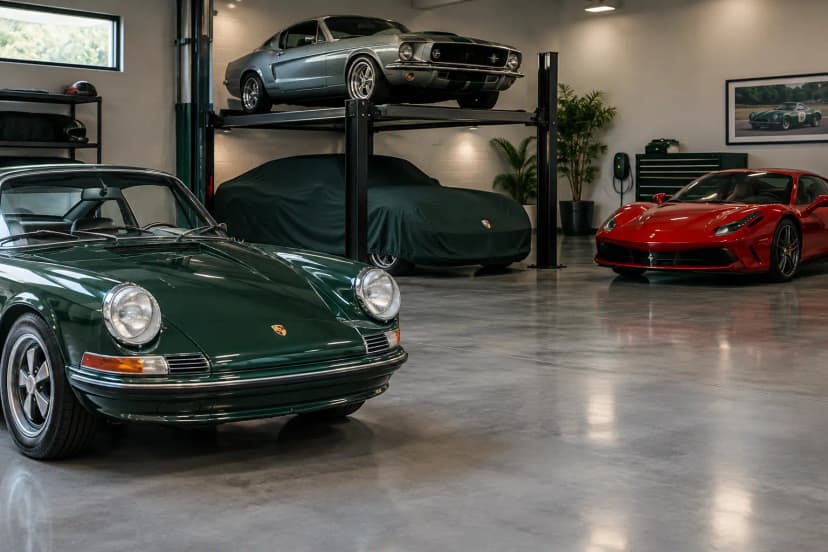
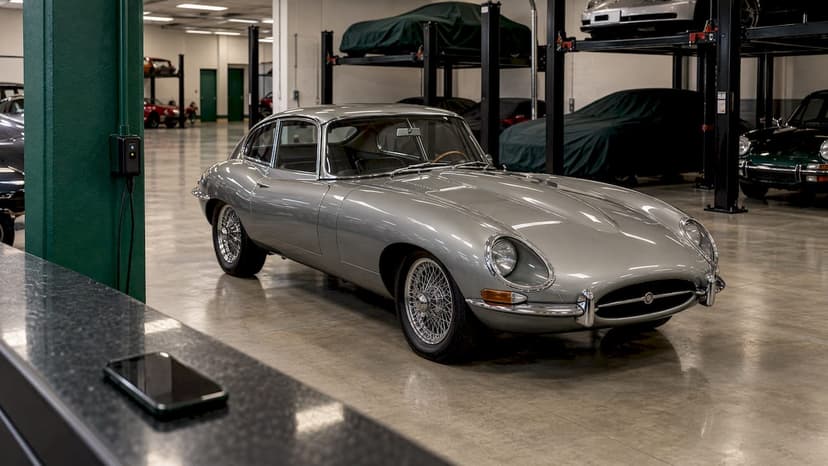
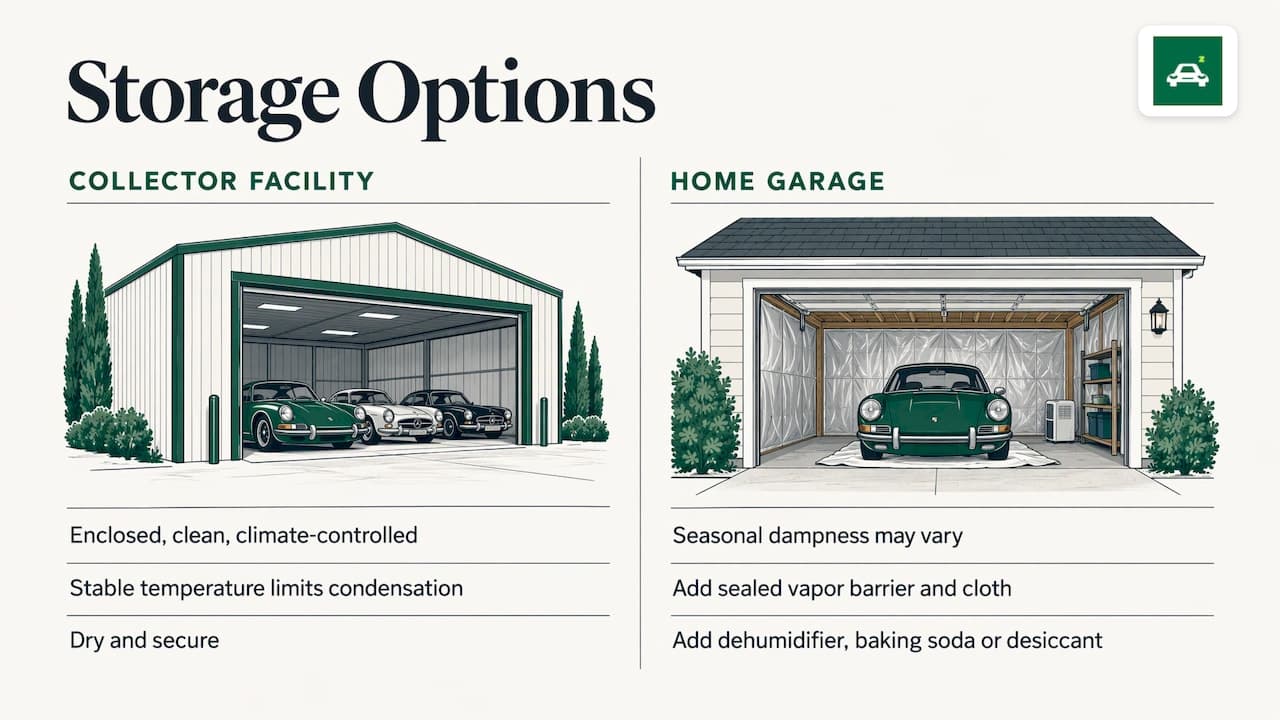
The space decides how much work everything else has to do. The best option is an enclosed, clean, climate-controlled building. A stable temperature keeps condensation off paint, chrome, wiring, upholstery and brake parts, which is the reason serious collectors pay for it. Humidity is the number to watch, and our guide to what humidity level is best for car storage explains the range to aim for.
Progressive advises storing in a dry, climate-controlled, secure facility. If the car must stay at home, it suggests washing the concrete with degreaser, laying a sealed plastic vapor barrier with cloth on top to stop ground moisture reaching the undercarriage, and adding a dehumidifier plus baking soda or desiccant bags.
Where a home garage falls short is consistency. A garage that is dry in October may be damp in March, and the car has no one watching it. A facility built for collector cars removes that variable. If you want a place near you, browse exotic and classic car storage by city, or look at a local page such as Chicago, Philadelphia, Los Angeles or Sterling, Virginia.
Step 2: Fix Problems and Wash the Car
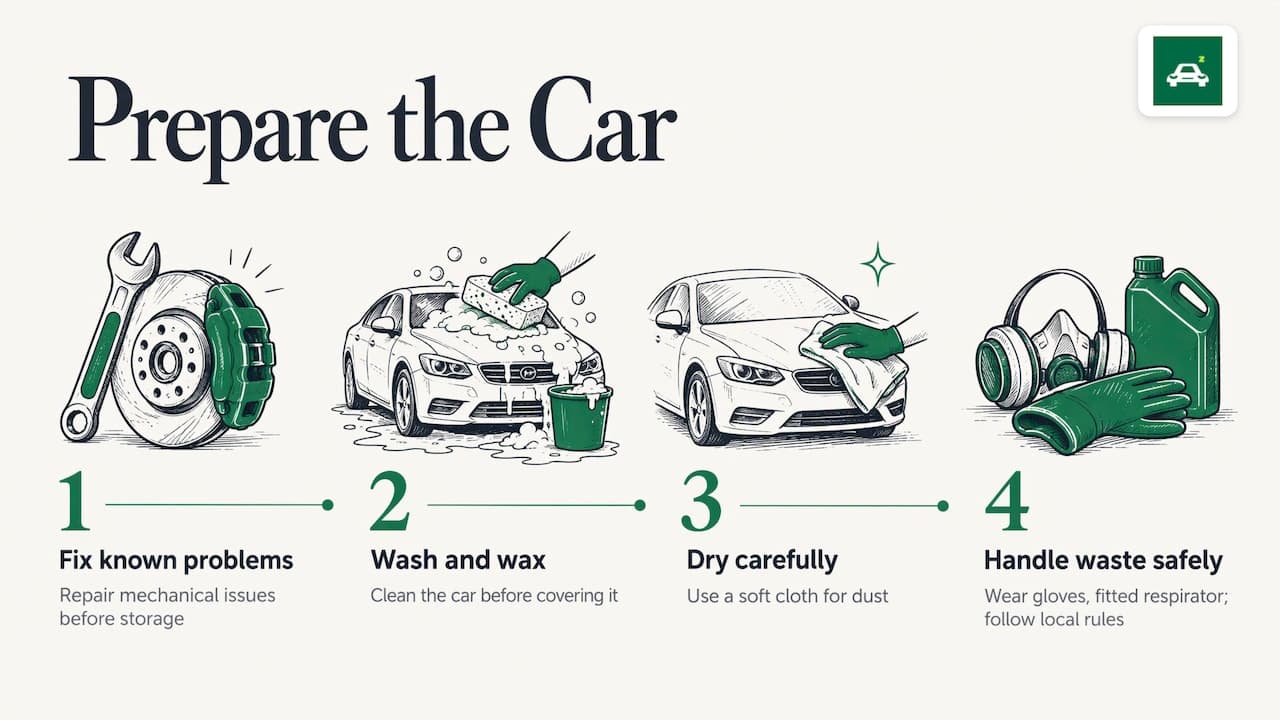
Storage hides small problems and then makes them worse. Fix known mechanical issues first: a sticking brake caliper in October will be seized by April, as Classic Cars Arena notes in its winter checklist.
Then wash and wax. AAA Northeast recommends washing and waxing the car before covering it. Dirt, bird droppings and bugs left on paint for months can etch it. Dry the car completely, and wipe dust only with a soft cloth, because State Farm warns that dust wiped with a dry rag scratches paint.
If you do the work in your own driveway, remember that gasoline and used motor oil are hazardous. The National Park Service’s guidance on preparing historic vehicles says to wear gloves and a fitted respirator with an organic-vapor filter and to dispose of waste under local guidelines. Many service stations accept small amounts for a fee.
Step 3: Treat the Fuel System
Fuel is the step with the most disagreement, so decide by how long the car will sit.
- Up to about six months: fill the tank and add stabilizer, then drive or run the car so treated fuel reaches the carburetor or injectors. American Collectors Insurance suggests ethanol-free gasoline or a stabilizer. AAA Northeast notes that gasoline typically has a 30 to 45 day shelf life, which is why stabilizer matters.
- Beyond six months: Classic DeLorean Motor Company’s long-term storage guidance says to drain the fuel if storing over six months, and to run the system dry if storing over a year.
A full tank leaves less room for condensation to form, which is why many owners fill up. Whichever route you take, do not park the car on untreated fuel.
Step 4: Refresh the Fluids
Old oil holds moisture and acids, so change the oil and filter right before storage and drive roughly a dozen miles to circulate it, as Progressive suggests. Top off the other fluids so they are full and fresh.
Two fluids need extra attention:
- Brake fluid. It absorbs water over time, which is why American Collectors Insurance lists refreshing hygroscopic fluids such as brake fluid among its winter steps. DeLorean’s guidance suggests flushing brake and clutch hydraulics every two years.
- Coolant. Check the freezing point with a hydrometer. AAA Northeast recommends a 50/50 antifreeze and water mix that protects to -34 degrees.
Fluid checks are tedious to track across a season. They are among the services we list for cars in our facilities, alongside battery maintenance, detailing and exercise drives.
Step 5: Protect the Battery
A battery that sits dead for months is damaged for good. Classic Cars Arena warns that a fully discharged lead-acid battery sustains internal damage and will not hold full capacity afterward.
Your options:
- Battery maintainer. Disconnect the negative terminal and connect a maintainer, sometimes called a battery tender. Progressive specifies a maintainer rather than a plain trickle charger, which it calls a potential fire hazard.
- Disconnect the cables. Progressive also lists unhooking the battery cables as an option.
- Remove the battery. JD Power mentions storing the battery in a dry 40 to 60°F environment. DeLorean’s guidance says to remove it if storage will not stay above freezing.
The maintainer only helps if someone confirms it is still powered. That is the weak point of home storage: a tripped breaker in January goes unnoticed until spring. Battery maintenance is part of the care we list for cars in storage.
Step 6: Tires, Brakes and Parking
Tires develop flat spots when a car sits on the same contact patch. American Collectors Insurance advises inflating to the maximum safe pressure, and AAA Northeast suggests parking on 2-inch foam board squares. DeLorean’s guidance says to air tires to the limit on the sidewall label and move the car a foot or two each month.
Leave the parking brake off. Progressive recommends tire chocks instead so pads and rotors do not rust together. Ford’s owner manual guidance for vehicles stored 30 days or more says to move the vehicle at least 25 feet every 15 days to lubricate working parts and prevent corrosion.
Step 7: Keep Rodents Out
A warm engine bay is an inviting nest. State Farm lists mice and squirrels nesting in engine bays and chewing wires or seats as a core storage risk. Progressive recommends rodent deterrent and steel wool in the exhaust pipes and the air cleaner snorkel. AAA Northeast adds blocking gaps in the garage so critters cannot enter. Whatever you plug the exhaust with, leave yourself a visible reminder to remove it before starting the car.
Keep food, pet food and bird seed out of the storage area entirely.
Step 8: Cover the Car and Manage Moisture
Use a fitted, breathable cotton or flannel cover. Progressive recommends this specifically, because plastic or non-breathable tarps trap moisture against the paint. Classic Cars Arena suggests cracking the windows about an inch for air circulation, which matters more in an unheated garage or barn.
Hillbank, a classic car insurer, points out that inspecting door, trunk and window seals before storage can stop moisture entering, and that a dehumidifier in enclosed storage helps most in coastal or humid areas. Cabin silica packs do not replace controlling the room itself.
Winter Storage: What Changes
Winter adds two problems: freezing temperatures and wide swings in humidity. Cover coolant protection, a fully charged and maintained battery, and moisture control first. American Collectors Insurance also notes that for most classics from the 1950s onward, periodic starting and running to full operating temperature is beneficial, while delicate or race-prepped cars should generally stay sealed until spring. A short idle that never reaches temperature builds condensation in the engine and exhaust, so either bring the car to full temperature or leave it off.
Unheated garage or outdoors
Progressive says an unheated garage is not ideal but better than somewhere more exposed, and any garage helps deter theft. If the only option is an open-air carport, avoid surfaces that trap humidity, like grass and dirt. DeLorean’s guidance is blunt: never store outside, and if unavoidable, use paved, well-drained ground. Ford adds that vehicles stored outside need regular maintenance to protect against rust and weather damage.
Security and Insurance
State Farm advises locks, alarms or a steering wheel lock, and says not to leave spare keys or titles in the car. It also suggests considering comprehensive insurance. Progressive notes that classic car insurers may encourage or require a private garage, pole barn or storage unit, so confirm your policy terms before you choose where the car sleeps.
At home, the garage door is your first line of defense. A solid door such as carriage house garage doors with a quality opener and lock makes a quick grab harder. A monitored facility adds staff and cameras on top.
What to Check While the Car Is Stored
Storage is not set-and-forget. A practical monthly routine, built from the guidance above:
- Confirm the space is still dry and no water has come in.
- Check that the maintainer has power and the battery is holding charge.
- Look at tire pressure and move the car a few feet to shift the contact patch.
- Inspect the cover for rubbing, displacement or moisture underneath.
- Look in the engine bay and around the car for rodent droppings, chewed material or nests.
That is five checks, repeated every month or so for the whole season. If you travel, own several cars or live far from the garage, this is where plans slip. We offer inspection reports and photo check-ins to your phone, and you can request a pickup or details through the app, so you can see the car without driving to the facility. For moving a car in and out, see our guide to pickup and delivery for stored collector cars.
Bringing the Car Out of Storage
Volo Cars suggests starting with a once-over for rodent nests, chewed wires, leaks and rust. Then start gently, let fuel circulate and oil pressure build, idle to operating temperature, and test the electrics. Take a short neighborhood drive to test brakes, handling and shifting before any highway run. Remove exhaust plugs and steel wool first, and check tire pressure back down to the recommended road figure.
Let Us Handle the Storage Routine
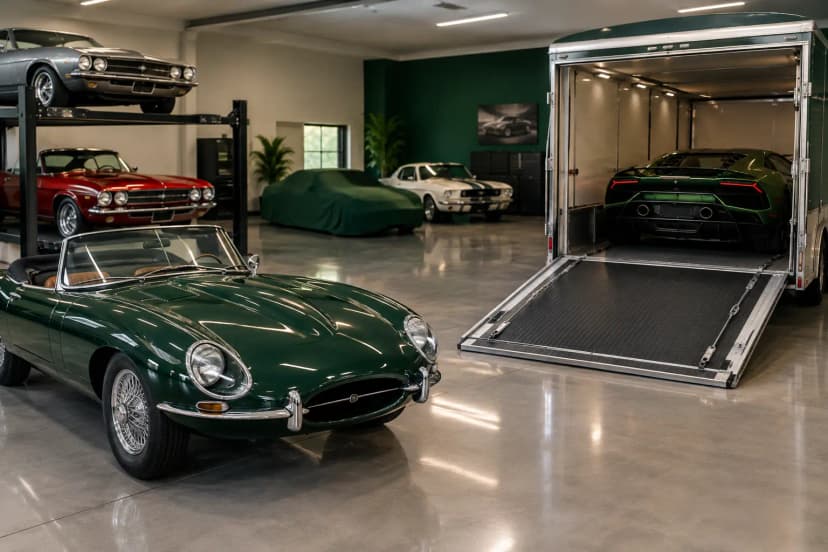
The steps above are the routine for one car in one garage. If you would rather not run it yourself, NapGarage lists climate-controlled exotic and classic car storage with battery maintenance, detailing, fluid checks and exercise drives, plus inspection reports and photo check-ins on your phone. Enclosed transport and pickup requests through the app are part of the offer too.

Pick a city on our storage by city page and send a quote request. For a longer look at choosing, preparing and budgeting, read our classic car storage guide.
Our Perspective
Most classic car damage we hear about does not come from a dramatic event. It comes from slow things nobody was watching: a battery that drifted flat, a cover holding moisture, a tire sitting on one spot.
That is why we focus only on enthusiast-grade storage. A climate-controlled building sets the baseline, and the care around it keeps the car ready: battery maintenance, fluid checks, detailing and exercise drives, with inspection reports and photo check-ins so you can see your car without making the trip.
Our app lets you request a pickup or details whenever you want the car, so storage supports your driving instead of getting in its way. For a collector, that combination of stable conditions, regular attention and easy access is what turns storage into protection for the investment.
NapGarage Team
FAQ
What happens if a classic car sits for three months?
The battery and fuel usually show problems first. JD Power reports that not starting a car for more than a month risks a flat battery, and AAA Northeast notes gasoline typically lasts only 30 to 45 days. With a maintainer, stabilized fuel, inflated tires and a dry space, three months is manageable.
Is it okay to store a classic car in an unheated garage?
Yes, for a prepared car it is better than being outdoors. Progressive says an unheated garage is not ideal but beats a more exposed spot and helps deter theft. Protect coolant against freezing, keep the battery on a maintainer, control moisture and block rodents.
How often should a classic car be driven in storage?
Experts cited by JD Power recommend driving every two to three weeks, at least 10 miles with some highway speed. If that is not possible, Ford advises moving a stored vehicle at least 25 feet every 15 days. Only start the car if you can bring it to full operating temperature.
Should I leave the parking brake on?
No. Progressive recommends using tire chocks instead of the parking brake, so pads and rotors do not rust together. DeLorean’s guidance likewise says to leave the hand brake off during storage.
Sources
- Conserve O Gram: Preparing Historic Vehicles, National Park Service
- Classic Car Storage Tips, Progressive
- Preparing Your Classic Car for Winter Storage, American Collectors Insurance
- The Do’s and Don’ts of Winter Car Storage, AAA Northeast
- How Long Can a Car Sit Without Being Driven, J.D. Power
- Preparing Your Classic Car for the Spring, Volo Cars
- Classic Car Storage: Common Pitfalls and Risks, State Farm
- Long Term Storage, Classic DeLorean Motor Company
- Storing Your Vehicle, Ford Owner Manual
- Classic Car Winter Storage Checklist, Classic Cars Arena
- Best Storage Solutions for Protecting Your Classic Car, Hillbank