Remote Monitoring for Stored Cars That Works
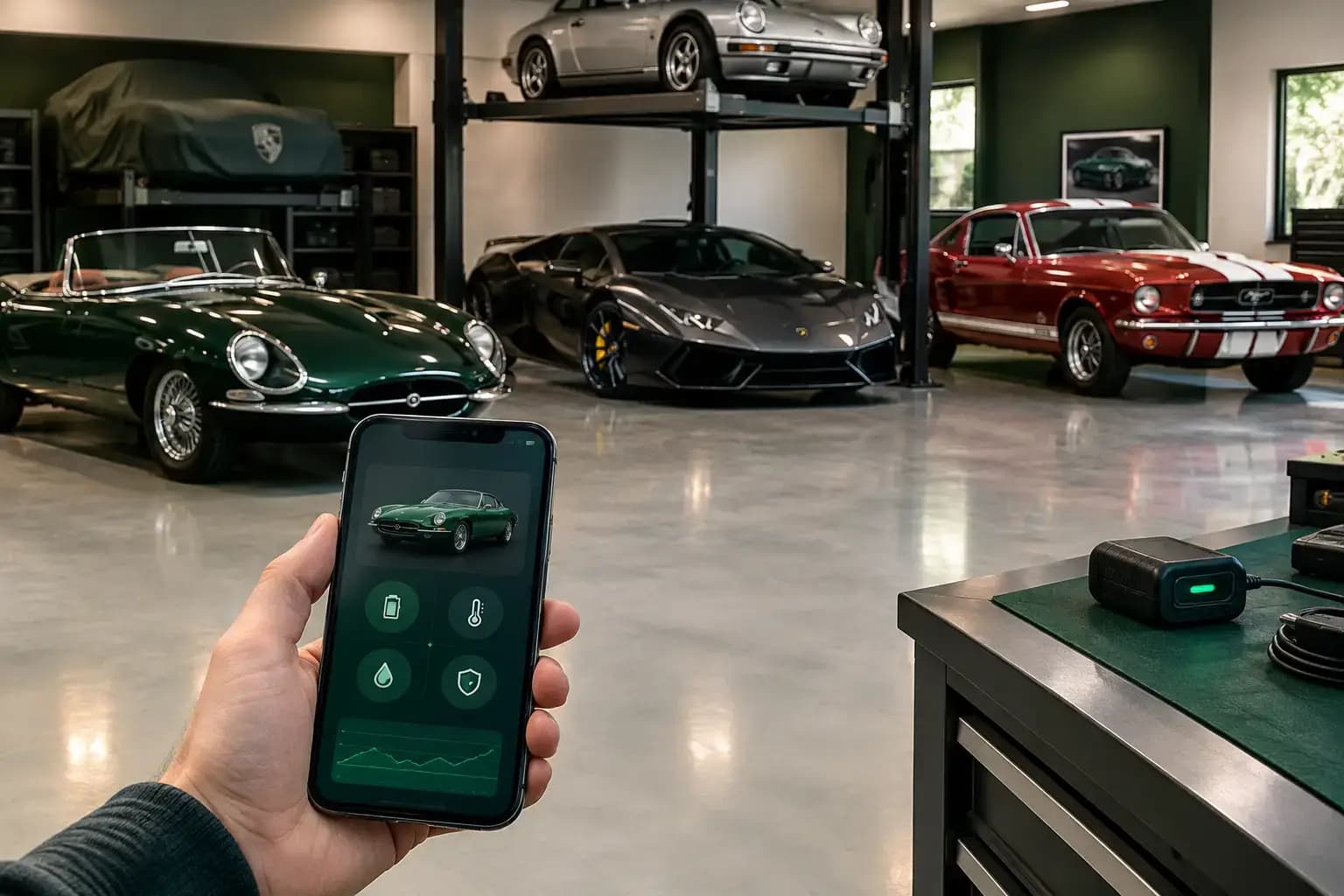
A collector car can look perfectly still while its condition quietly changes. A battery tender can lose power, humidity can rise after a weather event, a tire can begin to lose pressure, or a small fluid spot can appear beneath the car. Remote monitoring for stored cars gives owners a practical way to know what is happening between visits, without treating a valuable vehicle like an unattended asset.
For exotic, classic, and collector vehicles, the goal is not constant surveillance. It is documented care, clear accountability, and enough visibility to make decisions before a small issue becomes an inconvenient surprise.
What remote monitoring should actually show you
A useful remote monitoring program combines facility data with eyes-on vehicle care. A camera pointed at a parking space may confirm that a car is present, but it does not tell you whether the tender is connected, whether the cabin smells damp, or whether a tire has begun to soften. The people caring for your car still matter.
Start with the storage environment. Climate-controlled storage should provide a consistent temperature range and managed humidity, rather than simply heated or air-conditioned space. Exact targets depend on the vehicle, local climate, and facility design, but the important question is whether readings are measured, reviewed, and available when needed. A facility that can explain how it monitors temperature and humidity is more useful than one that only advertises climate control.
Then consider vehicle-specific reporting. A good check-in documents the car's condition with dated photos and plain-language notes. Depending on the service plan and storage duration, those notes may cover battery-tender status, tire condition, visible leaks, warning lights, fluid checks, cover placement, and any change noticed by staff.
This creates a condition trail. If you are preparing for a concours event, listing a car for sale, or returning after a winter away, that trail is more valuable than a general assurance that the vehicle was "looked after."
Remote monitoring for stored cars is a care workflow
The best systems do not overwhelm an owner with alerts. They establish a predictable rhythm: intake documentation, scheduled inspections, exception alerts, service approval, and a final readiness check before release or pickup.
Begin with a documented intake
Remote oversight starts on the day the vehicle arrives. The facility should record exterior condition, mileage, fuel level, existing marks, wheel and tire condition, and accessories that remain with the car. Photos should be clear enough to identify the vehicle's baseline condition, not merely prove that it entered the building.
For cars with specific requirements, intake is also the time to document instructions. That can include battery-tender connection points, alarm procedures, lift restrictions, immobilizer behavior, tire-pressure preferences, fuel-stabilizer requirements, or a no-drive instruction. A modern exotic with a sensitive electrical system should not receive the same assumptions as a carbureted classic that needs a different seasonal routine.
Set the inspection cadence around the car
Monthly check-ins work well for many stored cars, but there is no universal schedule. A long-term stored classic in a stable climate-controlled environment may need a different cadence than a recently transported supercar, a vehicle with a known parasitic draw, or a car headed to a show in three weeks.
More frequent checks can provide confidence, but they also introduce handling. Every time a car is moved, started, covered, or repositioned, there is some exposure to human error. The right plan uses enough inspection to identify risk while avoiding unnecessary activity.
Ask what triggers an off-schedule inspection. Power interruptions, unusual humidity readings, a tender fault, transport arrival, a detected leak, or an owner request should all lead to a timely response rather than waiting for the next routine report.
Make exceptions visible and actionable
The useful part of monitoring is what happens when something changes. If a battery tender is not charging, an inspection report should state whether power at the outlet was checked, whether the connection was reseated, and whether a replacement tender or battery test is recommended. If fluid is found under the vehicle, the report should identify the location, photograph it, and explain the next reasonable step.
Owners should not have to interpret a vague message such as "issue observed." A clear notification identifies the condition, its urgency, the recommended action, estimated cost when available, and whether approval is required. That keeps the owner in control without asking them to coordinate every detail from another city.
Which updates are worth requesting
Not every stored car needs daily photos or a dashboard full of data. The right updates answer the questions that affect preservation and readiness.
A strong report generally includes dated exterior photos, an interior photo when appropriate, climate readings or a facility status update, battery-tender confirmation, and notes on visible changes. For longer storage periods, it can also include tire-pressure checks, fluid-level observations, and confirmation that covers, window position, and security procedures remain correct.
Exercise drives deserve special attention. They can be beneficial when performed deliberately, but a casual short drive is not automatically good for every collector car. A cold start followed by a few minutes of idling or a brief trip may introduce moisture and never fully bring fluids to operating temperature. Some owners prefer periodic exercise drives with defined mileage, route, operating temperature, and post-drive inspection. Others prefer no driving without explicit approval.
The same principle applies to starting the engine. A facility should follow the owner's instructions and the vehicle's needs, not a blanket rule designed for every car in the building.
Questions to ask a storage facility
Before choosing a facility, ask how remote updates are produced and who is responsible for them. Automated sensors are useful, but they do not replace trained staff. Conversely, a manual photo report without environmental controls may not provide enough protection in a humid or highly variable climate.
It is also worth asking whether you can request service through a single point of contact, how approvals are documented, and how quickly the team responds to an exception. If you need your vehicle for a weekend drive, auction inspection, or track event, ask about ready-on-arrival pickup and enclosed vehicle transport. Monitoring has more value when it connects directly to action.
For owners comparing facilities, NapGarage helps organize these details alongside storage availability, climate control, care services, access, and transport options. The comparison should be about more than monthly price. A lower rate can be costly if it leaves you coordinating battery service, detailing, transport, and condition checks through separate vendors.
Use monitoring to plan the return to the road
The most satisfying remote update is not a photo of a covered car. It is the confirmation that the vehicle is ready when you want it.
A few days before pickup, request a release check. Confirm the battery is charged, tires are set to the agreed pressure, fluids have been reviewed if included in your plan, and the car is clean enough for its intended use. If the vehicle is being collected by a transporter, confirm pickup timing, keys, loading instructions, and whether enclosed transport is required.
For a show or special drive, build in time for detailing, a wash, fuel, and any requested exercise drive or mechanical check. For a seasonal return, a more thorough inspection may be appropriate, especially after several months in storage.
The point is simple: your car should not become a question mark once the garage door closes. Choose storage that can show you its condition, explain the care being performed, and act quickly when the vehicle needs attention. That is how a stored car rests easy and returns to the road on your terms.